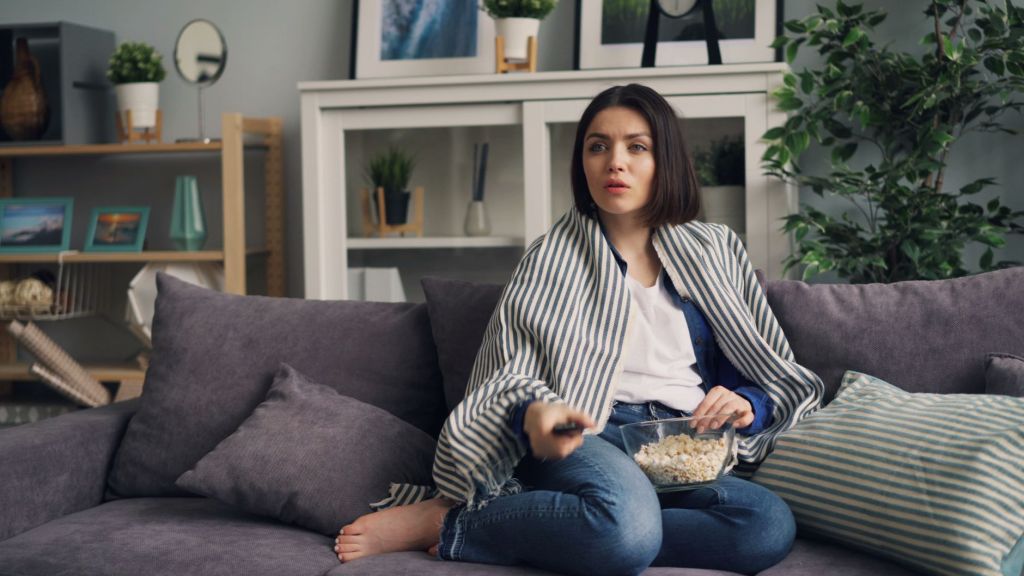
If you have spent any time on TikTok or Instagram this year, you have probably seen one. A young woman comes home from work, puts on a face mask, makes a single bowl of pasta, and eats it on the counch while the caption reads something like “POV: you live alone and have no friends, so this is your Friday night.” No party, no group dinner, no boyfriend appearing in the doorway. Just her, a lamp, and a quiet evening.
The internet has a name for these creators now: “loneliness influencers.” Their corner of the algorithm has been dubbed “solo-maxxing,” borrowing the “maxxing” slang that turns every habit into an optimization project. And with Thanksgiving landing this Thursday and the whole holiday season stretched out ahead of us, I can’t stop thinking about them, because this is the time of year when the gap between the life we’re told to want and the life we’re actually living gets the most attention.
The women behind the videos
The best-known of these creators is Lana Isa, a twenty-something software sales manager in Toronto who posts as @lanasololife. Her vlogs are almost aggressively ordinary: grocery runs at night, reading on a rock by the lake, the time she got locked out of her apartment late at night. When she started talking openly about not having friends, her following grew from roughly 2,000 people to more than 175,000 in about eight months. Isa has said that people rarely talk about being friendless because it still feels embarrassing, almost taboo, and that seeing others living the way she did made her feel connected again.
She isn’t the only one. Devon Noehring, who documents her life as a “single introvert,” has built an audience of hundreds of thousands, and she’s put the movement’s thesis about as plainly as anyone could: we are alone, but we are not lonely.
And then, as always happens online, the curiosity turned into backlash. Critics folded these women into a tidy, unflattering narrative: depressed, childless women in crisis, romanticizing their own isolation and spreading what one commentator called a kind of cozy defeatism. Isa has pushed back on that framing directly, saying she was never trying to romanticize having no friends.
I want to sit with both sides of this, because I think each of them is holding a piece of the truth.
What the videos get right
First, the honesty matters. For years, social media has been a highlight reel of brunches, bachelorette trips, and friend groups who seem to have been assembled by a casting director. If you were someone whose social life had quietly thinned out (after a move, a breakup, a pandemic, a demanding job, or a long stretch of just trying to get through), that highlight reel didn’t make you feel inspired. It made you feel like you’d failed at something everyone else found easy.
These videos say the quiet part out loud: plenty of people go home to an empty apartment, and that is not a moral failing. The comment sections tell the story better than I can. They fill up with people sharing that they live alone too, that they haven’t had a real friend in years, that they thought they were the only one. Melody Ding, an epidemiologist at the University of Sydney who studies social connection, has made the case that stripping the stigma from loneliness matters, and that we need to distinguish between people who choose solitude and people who don’t.
Second, and this is the part that interests me as someone who loves women’s history, there is something quietly radical about a woman being alone and fine on camera. Women’s solitude has historically been treated with suspicion. The unmarried woman was a spinster, a cautionary tale, a problem to be solved. Virginia Woolf argues, in A Room of One’s Own, that a woman needs money and a room with a lock on the door if she is going to think her own thoughts. Nearly a century later, a woman eating dinner by herself without apology still apparently needs to be explained.
The Irish Times columnist Breda O’Brien pointed out something I found genuinely moving: some of the most enthusiastic viewers of these videos are mothers of young children. For them, an evening of uninterrupted quiet isn’t sad. It’s a fantasy. The same footage reads as loneliness to one viewer and luxury to another, which tells you a lot about how differently women experience the demands placed on their time and attention.
What they leave out
Here’s where I get a little more cautious.
O’Brien’s broader argument is that these videos destigmatize being friendless while also making an unhealthy kind of loneliness look normal, even aspirational. She draws a line I think is worth keeping: introverts who genuinely enjoy their own company are fine. The trouble begins when involuntary isolation gets dressed up as a lifestyle aesthetic. She also notes something a little uncanny about the format. The creator gets a sense of connection from thousands of followers, but those followers can’t actually show up for her, and she can’t show up for them. It’s companionship with the reciprocity removed.
And reciprocity is the whole thing. Former U.S. Surgeon General Vivek Murthy, in his 2023 advisory on what he called an epidemic of loneliness, compared the health effects of social disconnection to smoking up to 15 cigarettes a day. I know that statistic gets thrown around a lot, but it lands differently when you remember what it’s measuring: not whether you enjoy being alone, but whether you have people who would notice if you didn’t.
The framing I keep coming back to comes from a clinician writing about the holidays just last week. Emily Econie, a psychiatric nurse practitioner at LifeStance Health, describes loneliness as the gap between the connection a person wants and the connection they actually feel. By that definition, solitude and loneliness aren’t opposites. They’re measured on different scales. You can be alone and not lonely. You can be at a Thanksgiving table with fourteen relatives and be the loneliest person in the room.
Solitude, or survival mode in a cozy sweater?
If you’ve been reading along with my survival mode posts, you probably know where my mind went next.
When you’ve been living in survival mode for a long time, withdrawal isn’t always a preference. Sometimes it’s protection. A nervous system that has been on high alert for months or years learns that people are a lot of work: unpredictable, demanding, potentially unsafe. Staying in starts to feel like the one restful option, and in the short term it often is. Bessel van der Kolk’s work makes the point again and again that we heal in relationships, through the experience of being truly seen and safe with other people. But when you’re depleted, being seen can feel like one more thing you don’t have the energy for.
So when I watch these videos, I don’t see a trend to mock. I see a lot of women who may be somewhere in the middle of that process, and some who are genuinely thriving on their own terms. From the outside, those two things can look identical. The pasta, the lamp, the face mask. The difference lives on the inside, and only you can answer for yours.
A few questions I’ve found more useful than “Am I lonely?”:
- When you cancel plans, do you feel relief that settles into calm, or relief that curdles into dread by Sunday night?
- If someone you like texted right now and asked to get coffee, would part of you light up, even if another part felt tired?
- Is your solitude something you’re choosing, or something you’ve stopped noticing you’re in?
There are no wrong answers. But they’re worth being honest about, especially this week.
If you’respending the holidays alone
Maybe you’re spending Thursday on your own this year, by choice or by circumstance. You are in a lot of company there. Recent surveys suggest roughly half of Americans feel lonely around the holidays, and millions spend them by themselves because of distance, conflict, or loss.
I’m not going to tell you to throw a Friendsgiving or join a gym. What I will gently suggest is this: let your solitude be honest. If it’s restful, enjoy it fully and without explaining it to anyone. If there’s an ache underneath it, let that be true too, and maybe let it nudge you toward one small act of reaching. One text. One “thinking of you.” One reply to a comment section stranger who sounds like they could use it. Connection rarely arrives as a sweeping transformation. It usually starts as something small enough that it almost doesn’t count.
The solo-life creators, at their best, are showing us that a quiet life isn’t a failed life. I’d just add the footnote: a quiet life is still allowed to have people in it.
If the loneliness you’re carrying this season feels heavier than a quiet night in, please reach out to someone you trust or a mental health professional. In the U.S., you can call or text 988 anytime to reach the Suicide & Crisis Lifeline.



Leave a Reply