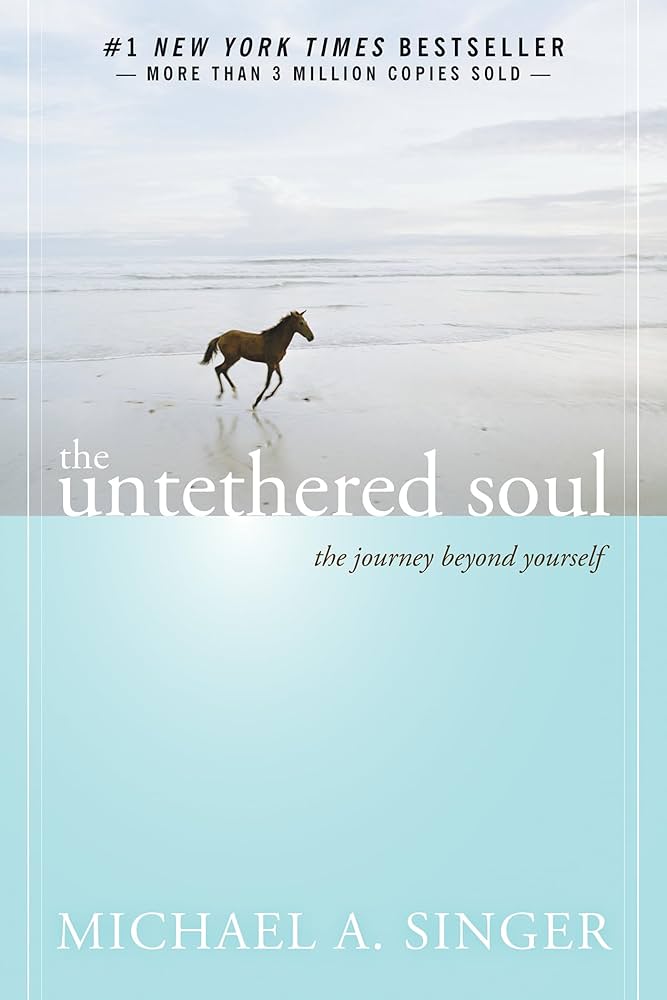
The Untethered Soul is one of those books that tends to travel by recommendation. Since its 2007 release, Michael A. Singer’s guide to inner freedom has found a wide audience, helped along by Oprah Winfrey’s enthusiasm and a steady stream of readers passing it on to friends. Its promise of a journey beyond the limits of the self places it squarely in a genre that often asks readers to rise above their problems rather than work through them.
What sets it apart is the simplicity of its starting point. Singer opens with a question that sounds almost too basic to matter, then builds the entire book around it: who, exactly, is the one noticing your thoughts?
What This Book Actually Is
The Untethered Soul, first published in 2007, is a short, quiet book about the relationship between you and the constant narration running in your head. Singer—a former software developer who spent decades practicing meditation and founded a spiritual community in Florida—argues that the voice that comments on everything you do isn’t really you. You’re the one hearing it.
From there, the book moves through five sections: waking up to that inner observer, understanding emotional energy as something that either opens or closes in us, learning to stop protecting old pain, going beyond fear, and finally living from a place of openness. His central image is a thorn. When something hurts us, we tend to build our whole lives around avoiding anything that might brush against it, rather than doing the harder work of removing it. Most of what we call “personality,” he suggests, is really just elaborate thorn management.
It’s less “fix yourself” and more “notice what you’re doing to stay comfortable, and consider doing something else.”
The Good Stuff
Singer is genuinely good at making abstract ideas feel physical. When he describes the moment your chest tightens during an argument, or the way you rehearse conversations in the shower that will never happen, it’s hard not to feel a little seen. The book’s strength is that it gives you a vocabulary for something most of us experience but rarely name: the gap between what’s happening and the story we immediately start telling about it.
The chapters are short and the language is plain, which makes it a good book to read slowly, a few pages at a time. I found it more useful as a companion than as a cover-to-cover read. Some days a single chapter gave me enough to sit with for a week.
The thorn metaphor has stayed with me. There’s a real wisdom in recognizing how much energy goes into arranging your life so no one ever touches the sore spot—and how small that arrangement can make your world.
The Reality Check
This is where I have to be honest because I’ve spent a lot of this year writing about survival mode and what it does to the body.
Singer’s core advice is to let pain pass through you rather than holding onto it—to relax, stay open, and refuse to close down. For someone dealing with ordinary frustration or old disappointments, that can be freeing. For someone whose nervous system learned to brace because bracing kept them safe, it can land very differently. Trauma researchers like Bessel van der Kolk have written about how the body holds onto threat in ways that awareness alone doesn’t release. You can’t always “just relax” out of a response your body built to protect you.
There’s also a fine line between the calm, detached witness Singer describes and the kind of detachment that survivors know as dissociation. The book doesn’t draw that line, and I wish it had. Stepping back to observe your thoughts is a useful skill. Stepping so far back that you stop feeling your own life is something else entirely.
And the later chapters, especially the idea that you can simply decide to be happy no matter what happens, start to drift toward the toxic-positivity territory I usually push back against. Singer means something deeper than “good vibes only,” but a reader in a hard season could easily come away feeling that their suffering is a choice they’re failing to make correctly.
None of this makes the book harmful. It just means it was written from a particular vantage point—one with a lot of solitude, stability, and time for practice—and it doesn’t always account for readers who aren’t standing there.
Who This Book Is Actually For
The Untethered Soul is best for people who are relatively steady but feel stuck inside their own heads—overthinkers, ruminators, people who replay conversations at 2 a.m. and want to understand why. If you’re curious about meditation or mindfulness but find most books on the subject either too academic or too sugary, Singer sits in a comfortable middle.
If you’re in the thick of trauma recovery, I’d still say it’s worth reading, but alongside something that takes the body seriously, and ideally with support from someone who knows your history. Take what opens something for you. Set down what asks you to override what your body is telling you.
The Bottom Line
The Untethered Soul isn’t going to fix anything on its own, and it occasionally overpromises in the way spiritual books tend to. But its central question—who is it that’s listening?—is a genuinely good one, and Singer asks it with patience and warmth.
The book works best as an invitation to notice, not a set of instructions to obey. Read it slowly. Argue with it a little. Keep the parts that make your world feel bigger, and trust yourself with the rest.
If You Like This Book, Try These
If The Untethered Soul resonates with you, here are some books that explore similar ground from different angles:
- Trauma-Sensitive Mindfulness by David Treleaven – The perfect counterweight to Singer. Treleaven explains why mindfulness practices can sometimes overwhelm trauma survivors, and how to adapt them so they actually help.
- Radical Acceptance by Tara Brach – A warmer, more psychologically grounded take on meeting your inner experience without judgment, written by a meditation teacher who is also a clinical psychologist.
- When Things Fall Apart by Pema Chödrön – Buddhist teachings on staying present with pain, with more room for grief and messiness than Singer allows.
- The Body Keeps the Score by Bessel van der Kolk – For readers who want to understand why letting go is sometimes a physical process, not just a mental decision.
- The Surrender Experiment by Michael A. Singer – Singer’s memoir of what happened when he tried to live his own philosophy. It makes the ideas in this book feel more human and shows the life they came out of.
Rating: 3.5/5 Stars
Available wherever books are sold. Check your local independent bookstores first, or find it online through Amazon. Link below.







Leave a Reply