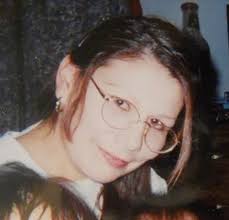
Disclaimer: This article discusses the unsolved murder of Victoria Jane Eagleman and contains references to domestic violence, sexual assault, and violence against women. Reader discretion is advised. The information presented is based on publicly available sources and case documentation. No individuals mentioned have been charged or convicted in connection with this case. All persons are presumed innocent unless proven guilty in a court of law.
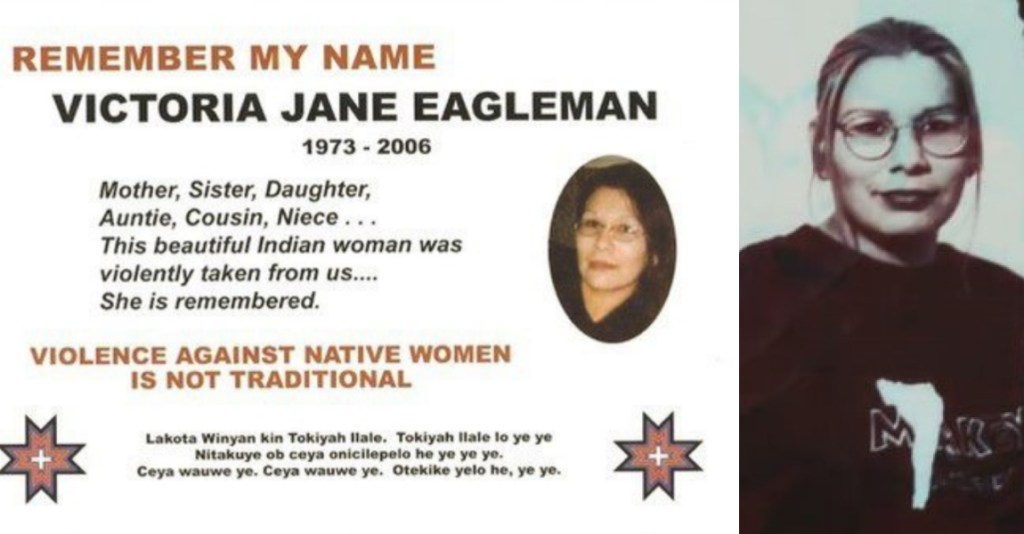
In the small, tight-knit community of Lower Brule Lakota Indian Reservation in South Dakota, Victoria “Vicki” Eagleman disappeared on July 28, 2006, after spending the day swimming with friends along the Missouri River. Nearly a month later, her body would be found stuffed in a culvert—but her murder remains unsolved nearly two decades later. What makes Vicki’s case particularly disturbing isn’t just the violence of her death, but the cascade of investigative failures that followed.
A Life Marked by Violence
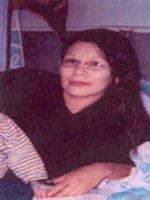
At the time of her disappearance, Vicki was navigating a difficult period. Newly divorced, she had moved back into her mother, June Left Hand’s, home on the reservation with her five children—a temporary arrangement while she figured out her next steps (Uncovered). She had begun dating Bernard LaRoche, known as Sonny, but the relationship was violent. According to June, her daughter had come home with injuries requiring medical attention more than once. In one incident documented in a 2024 Facebook post by Unsolved and Unknown, Vicki sustained a head injury that required 33 stitches. The pattern of abuse was clear and documented, a fact that would become critically important when Vicki vanished.
July 28, 2006: The Last Day
On July 28, 2006, Vicki spent the day at a popular swimming spot along the Missouri River with Sonny, his sister and her boyfriend, and Vicki’s own sister. According to several eyewitnesses, the group had “Gone to a well-known area to drink along the Missouri River” (Uncovered). It would be the last time anyone saw Vicki alive.
That night, Sonny returned to June’s house alone. When Vicki’s stepfather—who worked in local law enforcement—noticed the next morning that Vicki hadn’t come home, he confronted Sonny. According to LaRoche’s initial account, “he had last seen Vicki when she dropped him off at the house and he has no idea where she is” (Uncovered).
The following afternoon, July 29th, Vicki’s sister returned home and confirmed she’d been with Vicki earlier that day, saying “she had dropped her sister off,” though the exact location remains unclear (Uncovered). Crucially, Vicki’s sister also reported that “Vicki and LaRoche had been fighting the previous day” (Uncovered).
The stories didn’t align. Sonny claimed Vicki dropped him off. Vicki’s sister claimed she dropped Vicki off somewhere. Someone wasn’t telling the truth about those final hours.
A Missing Person No One Searched For
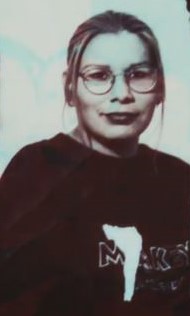
Despite her documented history of domestic violence and conflicting witness statements, it took six days before June formally reported Vicki missing on August 3rd (Uncovered). Even more troubling: when the report was filed, authorities didn’t investigate. According to case documentation, June was dismissed with the assumption that Vicki was “probably off drinking or partying” (Uncovered).
This response is particularly shocking given the circumstances. Vicki’s stepfather worked in local law enforcement. The reservation had a population of only around 1,300 residents—a community small enough that everyone knew everyone (Uncovered). And Vicki had five children at home. The assumption that she had simply abandoned them to go party contradicts everything her family knew about her.
Later that month, Vicki’s children made a devastating discovery just a block from their home: their mother’s glasses, “smashed as if someone had driven over them,” and one of her rings (Uncovered). June turned these items over to the police. Still, according to the case timeline, “it won’t be until the end of August that anyone actually starts looking into Vicki’s disappearance, despite her stepfather working in local law enforcement” (Uncovered).
The Anonymous Callers
In the weeks following Vicki’s disappearance, June “started to get bizarre phone calls from members of the local community about their theories on what happened to Vicki, including providing awful details in the last moments of Vicki’s life” (Unsolved and Unknown, Facebook). June reported every theory to the police, but no action was taken.
Who were these callers? What did they know? Were they witnesses afraid to come forward officially, or were they perpetuating rumors in a small community where gossip spreads quickly? The content of these calls—described as including “awful details”—suggests that at least some community members know more than they were willing to tell authorities on the record.
Community Intervention
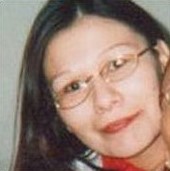
It wasn’t until August 14th—more than two weeks after Vicki was reported missing—that a community alert was finally issued, acknowledging that “it is considered abnormal that Vicki would not be in contact with her family for that period of time” (Uncovered).
On August 22nd, frustrated by the lack of official action, the Lower Brule community organized its own search. More than 100 people turned out on horseback, ATVs, boats, and trucks to look for Vicki (Uncovered).
Bernard Laroche, Vicki’s boyfriend, did not participate in the search. When a reporter interviewed him that day, two details stood out: he “consistently refers to Vicki in the past tense,” and “his breath smelled of alcohol” (Uncovered). For someone whose girlfriend had been missing for nearly a month, referring to her in the past tense raised obvious red flags.
The first day of searching yielded nothing.
August 23rd: The Discovery
On August 23rd, “community search volunteers found Vicki’s body stuffed into a culvert just off the Native American Scenic Byway in Lower Brule along Medicine Creek” (Unsolved and Unknown, Facebook). She was found “naked in a remote area of the Lower Brule reservation” (Uncovered). According to the initial assessment, “There is obvious blunt force trauma to her head, and she appeared to have been sexually assaulted” (Uncovered).
The clothing Vicki was last seen wearing— “a tan shirt with spaghetti straps, jean shorts, a light blue scarf, and flip-flop sandals” (Unsolved and Unknown, Facebook)—was never recovered. The absence of her clothing raises critical questions: Where did it go? Did the perpetrator take it to prevent forensic evidence from being gathered? Was it burned, buried, or discarded somewhere it would never be found?
Evidence on the Sidewalk
After Vicki’s body was found, her family was told that police had suspects. But no arrests were ever made. Then something inexplicable happened: “Vicki’s case file, including crime scene photos, is found on the sidewalk outside of the police station as if they had been discarded” (Uncovered).
The discovery was made by a passerby who collected the documents and returned them to the police. But the incident raises disturbing questions: How does a case file end up on the street? Was this negligence, or was it deliberate? Most critically: what might have gone missing from that file while it sat exposed on a public sidewalk?
A Pattern of Systemic Failure

In October 2006, the Lower Brule community and the South Dakota Coalition Against Domestic Violence and Sexual Assault organized a memorial walk for justice, traveling from the site where Vicki’s body was found to the Lower Brule Community Center (Uncovered).
In April 2007, the FBI and the Lower Brule Sioux Tribe offered a reward for information. According to case documentation, the reward was eventually increased to $15,000, with “a $5,000 reward through the FBI” (Unsolved and Unknown, Facebook). Nearly eighteen years later, no one has claimed it.
The timeline of Vicki’s case reveals a pattern of institutional failure at nearly every turn:
- July 28: Vicki disappears after a day spent with witnesses, including boyfriend with a documented history of violence
- August 3: Missing person report filed, but dismissed as a woman “probably off drinking or partying.”
- Early August: Physical evidence (glasses, ring) found and turned over to police—no investigation launched
- August 14: Community alert finally issued—17 days after disappearance.
- August 22-23: Community organizes its own search; volunteers find Vicki’s body the next day.
- Late 2006: Case file found discarded outside police station.
As Uncovered notes, “It took weeks for a search to take place once Vicki went missing, even with a history of domestic violence.” In a community of 1,300 people, with a victim who had five children at home and a documented pattern of abuse by her current boyfriend, the delays are unconscionable.
The Broader Context
Vicki Eagleman is one of 12 unsolved homicides of Indigenous women in South Dakota (Uncovered), part of a national crisis of Missing and Murdered Indigenous Women (MMIW). Her case exemplifies the systemic failures that characterize many MMIW cases: dismissive initial responses, delayed investigations, jurisdictional complications on tribal lands, and a lack of resources dedicated to solving crimes against Native women.
The fact that Vicki’s case file ended up on the street—literally discarded—serves as a metaphor for how Indigenous women’s lives are valued by the justice system.
The Questions That Demand Answers
Nearly two decades after Vicki’s murder, questions still remain:
- What happened during the hours between when Vicki was last seen swimming with friends and when Bernard LaRoche arrived home alone?
- Why did witness statements about who dropped whom off that night contradict each other?
- Who made those anonymous phone calls to June with “awful details” about Vicki’s final moments, and what exactly did they know?
- Why did it take weeks to organize a search for a domestic violence victim with five children at home?
- How did a case file end up on the sidewalk outside the police station, and what evidence might have disappeared?
- Why has no one ever been arrested despite police telling the family they had suspects?
Vicki left behind five children who grew up without their mother. She deserved better than assumptions that she was “off drinking or partying.” Her case deserved better than to be literally thrown on the street.
If you have any information regarding Vicki’s case, please contact the FBI Pierre Office at (605) 224-1331.
If you or someone you know is experiencing domestic violence, help is available. Call the National Domestic Violence Hotline at 1-800-799-7233 (SAFE) or text START to 88788. For Native American communities, the StrongHearts Native Helpline is available at 1-844-762-8483. These services are free, confidential, and available 24/7.



 Kat McAdaragh
Leave a comment