
Book Review: Weyward by Emilia Hart
Have you ever felt like there was something wild and untamed inside you that the world kept trying to contain? Something that whispered of older ways, deeper knowledge, power that didn’t fit neatly into the boxes of society built for you? If so, Emilia Hart’s debut novel Weyward will feel like coming home to a part of yourself you didn’t even know was missing.
Weyward tells the story of three women across five centuries, all connected by blood, birthmarks, and an ancient power that runs in their veins. there’s Altha, accused of witchcraft in 1619; Violet, trapped in a gilded cage in 1942; and Kate, fleeing an abusive relationship in 2019. Each woman carries the Weyward name—or some version of it—and with it, an ability to communicate with nature that the world around them finds either useful or terrifying.
As Hart writes, “Weyward, they called us, when we would not submit, would not bend to their will. But we learned to wear the name with pride.” This line perfectly captures the novel’s central theme: the reclaiming of power from words meant to diminish.
What struck me most about this novel isn’t just the gorgeous writing, but how it captures something so many of us have felt: the sense that we’re living slightly out of step with the world around us. These women aren’t wielding wands or casting dramatic spells—their magic is quieter, rooted in beetles and birds, in knowing which plants heal and which harm. It’s the kind of power that has always existed in the margins, dismissed as superstition by those who fear what they can’t control.
Hart weaves these three timelines together with the skill of someone who understands that women’s stories have always been intertwined, even when separated by centuries. Each woman faces her own struggles with a world that wants to contain her, and their stories speak to both how much and how little has changed in how society treats women who refuse to be diminished.
There’s something deeply cathartic about watching these characters discover and embrace their abilities—not through violence or revenge, but through connection. Connection to nature, to each other across time, to parts of themselves they’d been taught to hide. In our current moment, when so many of us feel disconnected from the natural world and from our own instincts, Weyward offers a different way of being.
Hart’s prose shimmers throughout, particularly when she writes about time itself: “Who decides where things begin and end? I do not know if time moves in a straight line, or a circle.” This question haunts the entire novel, as past and present blur together in the most beautiful way.
The novel isn’t perfect—at times, the magical elements feel a bit too neat, and some plot threads resolve almost too easily. But these are minor with a book that does something far more important—it reminds us that what makes us different isn’t something to be ashamed of, but something to be celebrated.
Reading Weyward left me thinking about all the women throughout history who were called “difficult” or “strange” or “too much”—women who trusted their instincts, who refused to stay quiet, who found power in places others overlooked. Hart’s novel is a love letter to all of them, and to the wild, untamed parts of ourselves that we carry still. As one character reflects, “Perhaps one day there will be a safer time, when women could walk the Earth, shining bright with power, and yet live.”
If you’ve ever felt like you were born in the wrong time, or wondered what it would be like to trust your intuition completely, Weyward is waiting for you. It’s a reminder that sometimes the most profound magic isn’t about changing the world around us—it’s about changing how we see ourselves within it.
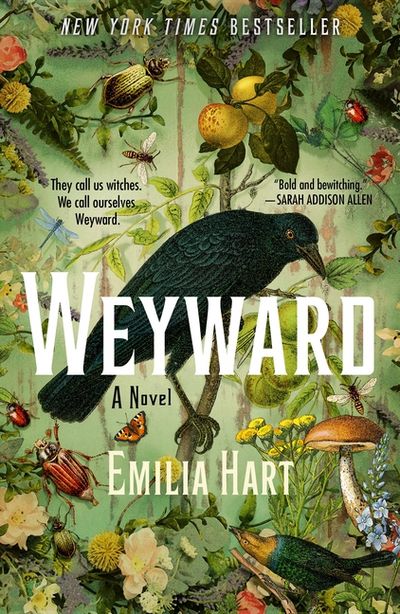
Rating: 4/5 stars
5 Magical Recommendations for You
- The Once and Future Witches by Alix E. Harrow- Another multi-generational story about women reclaiming their power through magic and sisterhood. Harrow’s prose has that same lyrical quality, but with a more overtly political edge that feels especially relevant today.
- The Ten Thousand Doors of January by Alix E. Harrow- If the idea of women finding doorways to other worlds (both literal and metaphorical) appeals to you, this one explores similar themes of belonging and the power of stories to reshape reality.
- The Invisible Life of Addie LaRue by V.E. Schwab- for readers drawn to the idea of women whose stories span centuries, though this one leans more toward romantic fantasy than folk magic.
- The Witch Haven trilogy by Sasha Peyton Smith- Set in 1911, this series follows young women discovering magical abilities in the wake of personal tragedy. Perfect if you want more of that historical women’s empowerment vibe.
- Circe by Madeline Miller- If you’re interested in stories that reclaim women’s narratives from mythology and history, Miller’s retelling of the witch-goddess’s story will captivate you.
Trust me on these—if Weyward made something stir inside you, these books will keep that feeling alive.





 Kat McAdaragh
Leave a comment