
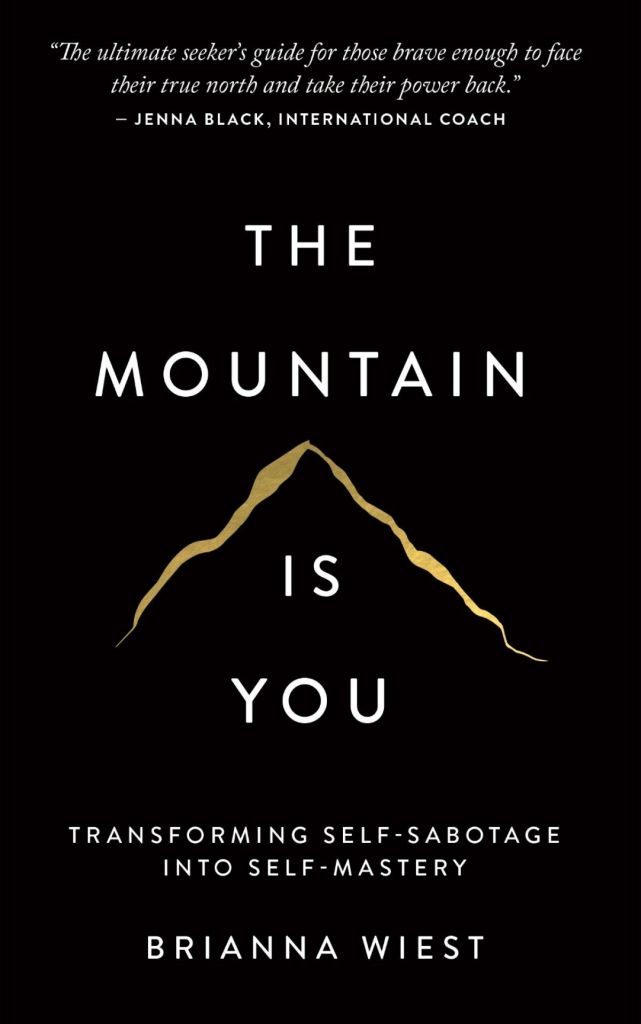
I picked up The Mountain is You during one of those periods when I was clearly getting in my own way but couldn’t quite figure out how to stop. You know the feeling—you want something, you have the capacity to get it, but somehow you keep creating obstacles that prevent you from moving forward. Brianna Wiest’s book promised insights into self-sabotage, and honestly, I was skeptical about yet another self-help book claiming to unlock the secrets of human behavior.
But here’s the thing: Wiest actually delivers something more nuanced than typical self-help fare, even if it’s wrapped in familiar packaging.
What This Book Actually Is
They Mountain is You is about the ways we unconsciously undermine ourselves and how to recognize these patterns before they derail our progress. Wiest’s central premise is that self-sabotage isn’t random destructive behavior—it’s often our psyche’s way of protecting us from perceived threats, even when those threats are outdated or imaginary.
The book explores how our survival mechanisms can become our biggest obstacles when they’re no longer serving us. It’s less “think positive and everything will change” and more “understand why you’re doing this so you can make different choices.”
What I appreciate most is that Wiest doesn’t treat self-sabotage as a character flaw or personal failing. She approaches it with curiosity rather than judgment, which makes the whole exploration feel less like self-criticism and more like detective work.
The Good Stuff
Wiest has a talent for making psychological concepts accessible without dumbing them down. She explains things like cognitive dissonance, attachment styles, and emotional regulation in ways that feel practical rather than academic. The writing is clear and direct, which makes it easy to absorb even when you’re dealing with the kind of brain fog that often accompanies periods of self-sabotage.
The book’s strength lies in its specificity. Instead of vague advice about “believing in yourself,” Wiest offers concrete examples of what self-sabotage looks like in different areas of life—relationships, career, health, and creativity. She helps you identify patterns you might not have noticed and understand the underlying logic of seemingly irrational behavior.
I found myself highlighting passages that feel like personal call-outs. Not in an uncomfortable way, but in that “oh, so that’s why I do that” way that makes you feel less crazy and more human.
The Reality Check
This isn’t a perfect book, and Wiest occasionally falls into some of the traps that plague the self-help genre. There are moments when the advice feels a bit too neat, when complex psychological patterns are presented as if they can be resolved through awareness alone. Real change is messier and more gradual than any book can fully capture.
Also, while Wiest acknowledges that some self-sabotage stems from trauma, the book doesn’t deeply explore situations where professional help might be necessary. If your self-sabotage patterns are rooted in significant trauma or mental health issues, a book—even a good one—might not be sufficient.
The writing occasionally veers into inspiration-speak that feels more like Instagram quotes than practical guidance. But these moments are relatively brief and don’t undermine the book’s overall usefulness.
Who This Book Is Actually For
The Mountain is You is best suited for people who are generally functional but keep finding themselves stuck in patterns they can’t explain. If you’re someone who sets goals and then mysteriously fails to follow through, who creates drama when things are going well, or who feels like you’re fighting against yourself more than external circumstances, this book offers valuable insights.
It’s particularly helpful for people who are tired of surface-level self-help advice and want something that acknowledges the complexity of human psychology without requiring a degree to understand it.
The Bottom Line
Despite my initial skepticism, The Mountain is You offers useful tactics for understanding self-defeating behavior. It’s not going to change your life overnight, but it might help you recognize patterns that have been invisible to you and give you some practical tools for making different choices.
The book succeeds because it treats self-sabotage as information rather than failure. It suggests that your resistance might be trying to tell you something important, and learning to listen to it—rather than just powering through it—could be the key to change.
If you’re looking for quick fixes or dramatic transformation stories, this isn’t your book. But if you want to understand why you keep getting in your own way and develop a more compassionate relationship with your own psychology, Wiest offers valuable insights.
If You Like This Book, Try These
If The Mountain is You resonates with you, here are some other books that explore similar themes with different approaches:
- Self-Compassion by Kristin Neff- A more research-based approach to being kinder to yourself during struggles. Neff’s work on self-compassion provides the emotional foundation that makes the practical work in Wiest’s book more sustainable.
- The Gifts of Imperfection by Brené Brown- Brown’s exploration of vulnerability and shame offers complementary insights into why we resist the things we want most. Her work on wholehearted living pairs well with Wiest’s practical approach to self-sabotage
- Untamed by Glennon Doyle- While more memoir than self-help, Doyle’s book explores the process of unlearning patterns that no longer serve you. It’s a good follow-up for anyone inspired to examine their conditioning more deeply.
- The Body Keeps the Score– by Bessel van der Kolk- For readers who recognize trauma as a factor in their self-sabotage patterns, van der Kolk’s book offers deeper insights into how our bodies and nervous systems contribute to these cycles.
- Atomic Habits by James Clear- If Wiest’s book helps you understand why you sabotage yourself, Clear’s book offers practical strategies for building the systems that support lasting change.
Rating: 4/5 stars
Available wherever books are sold. Check your local independent bookstore first, or find it online through major retailers.





 Kat McAdaragh
Leave a comment