
Why affirmations and bubble baths aren’t enough
Have you ever walked through the self-help section of a bookstore and felt slightly overwhelmed by the sheer volume of products promising to help you love yourself? There are books about falling in love with yourself in 30days, guides to radical self-acceptance, and approximately seventeen different versions of “You are Enough” affirmation journals.
It makes you wonder: if self-love is supposed to be natural and innate, why does it require so much merchandise?
That’s the thing about the modern wellness landscape—we’ve turned self-love into an industry, complete with products, programs, and profit margins. And like most industries, it’s more interested in keeping you consuming than actually solving your problems.
The Commodification of Self-Worth
Somewhere in the last decade, self-love stopped being an internal process and became a market category. You can buy self-love journals, self-love candles, self-love workshops, and self-love retreats. There are Instagram accounts dedicated to self-love quotes, apps for self-love meditations, and courses promising to teach you the “secrets” of loving yourself.
The message is clear: self-love is something you can purchase, achieve, and perform. It’s become another item on the wellness to-do list, right between your morning smoothie and your evening gratitude practice.
But here’s what nobody wants to tell you while they’re selling you a $47 self-love course: real self-acceptance isn’t something you can buy. It’s not a destination you reach after completing enough affirmations or taking enough bubble baths. It’s a messy, ongoing relationship with yourself that involves a lot more complexity than the Instagram quote suggests.
The Affirmation Trap
Let’s talk about affirmations for a minute, because they’ve become the poster child of commercialized self-love. The idea is simple: if you repeat positive statements about yourself often enough, you’ll eventually believe them. “I am worthy,” “I am enough,” “I love myself exactly as I am.”
I’ve tried this. I’ve stood in front of mirrors telling myself I’m beautiful while my internal voice screamed back with a detailed list of everything that was wrong with my appearance. I’ve repeated “I am confident” while feeling like a fraud for pretending to be confident about my lack of confidence.
The problem with affirmations isn’t that they’re useless—it’s that they’re often used as a way to bypass the actual work of understanding why you don’t feel worthy or enough in the first place. They’re emotional Band-Aids that cover up the wound without addressing what caused it.
Real self-acceptance often requires sitting with the parts of yourself you don’t like, understanding where your self-criticism comes from, and doing the slow work of changing your relationship with your inner critic. It’s less “I love myself exactly as I am” and more “I’m learning to be curious about why I’m so mean to myself.”
The Performance of Self-Love
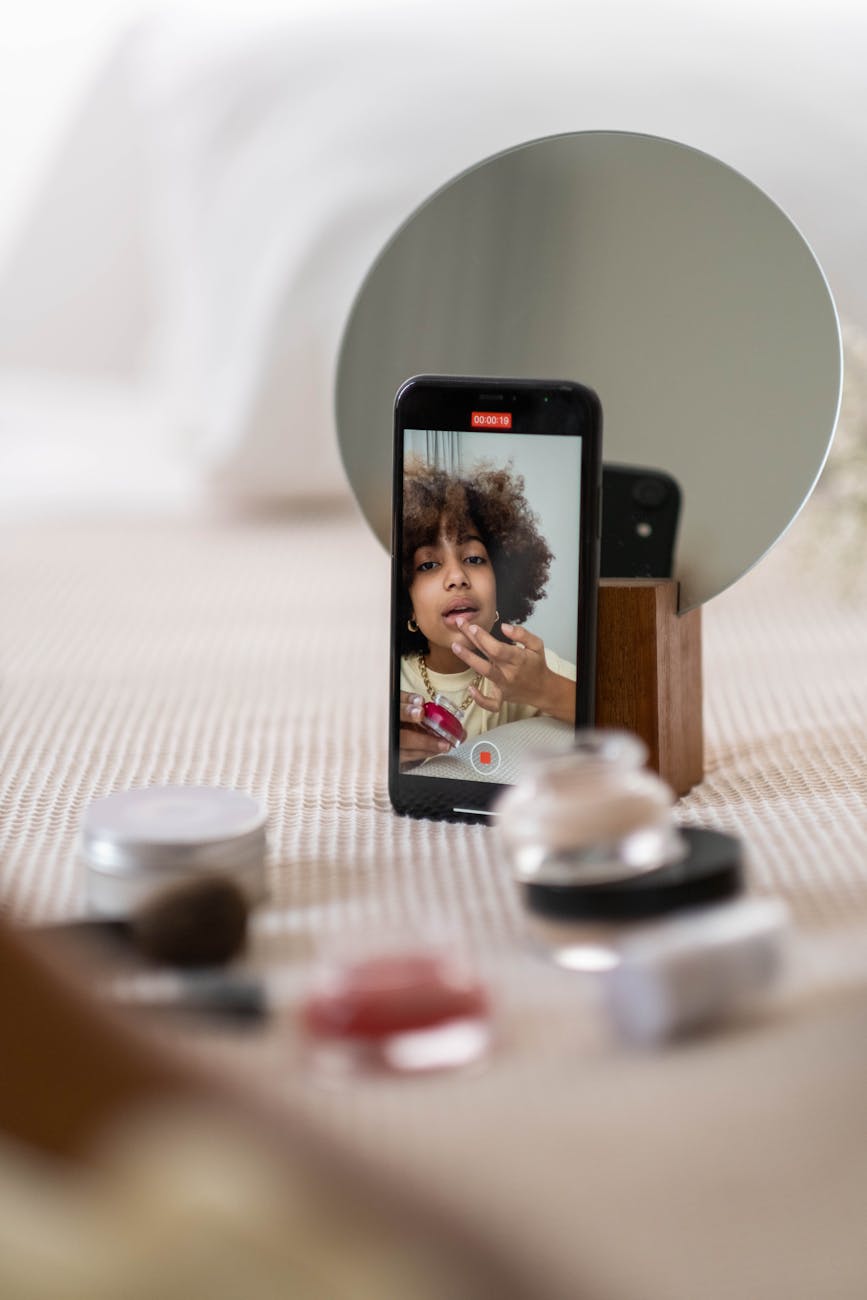
Social media has turned self-love into another thing to perform for approval. We post photos of ourselves with captions about “loving our imperfections,” share quotes about self-worth, and document our self-care routines to prove how well we’re taking care of ourselves.
But there’s something deeply ironic about seeking external validation for your journey toward self-acceptance. When self-love becomes content, when it becomes something you do for likes and comments, it stops being about your relationship with yourself and becomes about your relationship with your audience.
I’ve watched people post mirror selfies with paragraphs about body positivity while privately struggling with eating disorders. I’ve seen beautifully curated self-care Sunday posts from people who are burning out from trying to maintain their social media presence. The performance of self-love can actually take you further away from the real thing.
The Self-Love Bubble Bath
The wellness industry has convinced us that self-love looks like expensive skincare routines, luxurious bath products, and aesthetically pleasing bedroom setups. Self-care has been rebranded as self-love, and self-love has been rebranded as consumption.
Don’t get me wrong—bubble baths can be lovely. Taking care of your physical needs is important. But somewhere along the way, we started confusing treating ourselves nicely with actually liking ourselves. You can light all the candles and use all the face masks in the world, but if you’re still uncomfortable with who you are, the bath water is just going to get cold.
Real self-love might actually look like setting boundaries with people who drain your energy, even when it’s uncomfortable. It might look like choosing to do things that serve your long-term wellbeing instead of your immediate pleasure. It might look like having honest conversations with yourself about patterns you want to change.
It’s less Instagram-worthy than a perfectly arranged bath tray, but it’s also more sustainable than any product you can buy.
The “You Are Enough” Problem
Can we please talk about how exhausting the phrase “you are enough” has become? It’s plastered on everything from coffee mugs to wall art to meditation apps. And while I understand the intention behind it, there’s something about the constant repetition that makes it feel hollow.
First of all, enough for what? Enough for whom? The statement is so vague that it’s almost meaningless. Enough to deserve love? Enough to take up space? Enough to have opinions? The lack of specificity makes it feel like a cliché rather than a truth.
Second, telling someone they’re enough when they’re struggling with self-worth can feel dismissive of their actual experience. If I’m dealing with feelings of inadequacy that stem from childhood trauma or societal conditioning, being told I’m “enough” doesn’t address the complex psychological work required to heal those wounds.
Real self-acceptance often involves acknowledging that you’re not enough for some things—and that’s okay. You’re not enough to fix other people’s problems. You’re not enough to be everything to everyone. You’re not enough to be perfect. And recognizing those limitations isn’t a failure of self-love; it’s a sign of realistic self-awareness.
The Inner Work They Don’t Sell

Here’s what the self-love industry doesn’t want you to know: the real work of accepting yourself often involves getting uncomfortably honest about things you’d rather avoid. It means examining the critical voice in your head and asking where it came from. It means looking at the ways you abandon yourself to please others. It means sitting with feelings of inadequacy without immediately trying to think your way out of them positively.
This work doesn’t come with a price tag because it can’t be commodified. It happens in therapy sessions, in honest conversations with friends, in quiet moments when you catch yourself being cruel to yourself and choosing to respond with curiosity instead of judgment.
It’s the work of understanding why you believe you need to earn love rather than assuming you deserve it. It’s the work of recognizing that your worth isn’t dependent on your productivity, your appearance, or your ability to make other people happy.
It’s messy, non-linear work that doesn’t fit into a 30-day program or a three-step system. It’s the kind of work that happens over years, not weekends.
The Work That Actually Helps
I’m not saying that all self-love practices are useless or that the entire wellness industry is a scam. Some people genuinely find affirmations helpful. Some people do feel better after a good self-care routine. Some people benefit from courses and workshops about self-acceptance.
But what seems to help most people isn’t any specific product or practice—it’s developing a different relationship with themselves over time. It’s learning to talk to themselves the way they’d talk to a good friend. It’s recognizing self-criticism when it arises and choosing not to believe everything they think about themselves.
It’s often therapy, honestly. Professional help in understanding why you developed certain patterns of self-judgment and how to change them. It’s sometimes medication for anxiety or depression that makes self-compassion feel possible in the first place.
It’s building relationships with people who see you clearly and care about you anyway. It’s finding communities where you can be honest about your struggles without being told to just think positive thoughts.
A Different Kind of Enough
Maybe the most radical act of self-love isn’t telling yourself you’re perfect exactly as you are—it’s giving yourself permission to be imperfect, to be works in progress, to be human.
Maybe it’s admitting that you don’t love everything about yourself and that’s normal. Maybe it’s recognizing that self-acceptance doesn’t mean self-delusion. Maybe it’s understanding that you can work on improving yourself while also being kind to yourself in the process.
The self-love industrial complex wants you to believe that loving yourself is a problem to be solved, a goal to be achieved, a product to be purchased. But what if it’s none of those things? What if it’s just an ongoing practice of treating yourself with basic human decency?
What if instead of trying to fall in love with yourself, you just tried to be a good friend to yourself? What if instead of affirming your perfection, you acknowledge your humanity? What if instead of buying products to prove your self-worth, you just acted like you matter because you do?
Beyond the Industry

The truth is, you don’t need to love yourself in some grand, transformative way. You don’t need to have a perfect relationship with yourself or achieve some enlightened state of self-acceptance. You just need to stop being mean to yourself and start treating yourself with basic kindness that you’d show any person you care about.
This isn’t something you can buy or achieve or check off a list. It’s something you practice, imperfectly, for the rest of your life. Some days you’ll be better at it than others. Some days you’ll forget and slip back into old patterns of self-criticism. That’s not a failure of self-love—that’s being human.
The self-love industrial complex will keep selling you solutions to a problem that doesn’t actually need to be solved, just lived with and worked through. But you already have everything you need to start treating yourself better. You don’t need to buy it, earn it, or achieve it.
You just need to begin to practice.






 Kat McAdaragh
Leave a comment