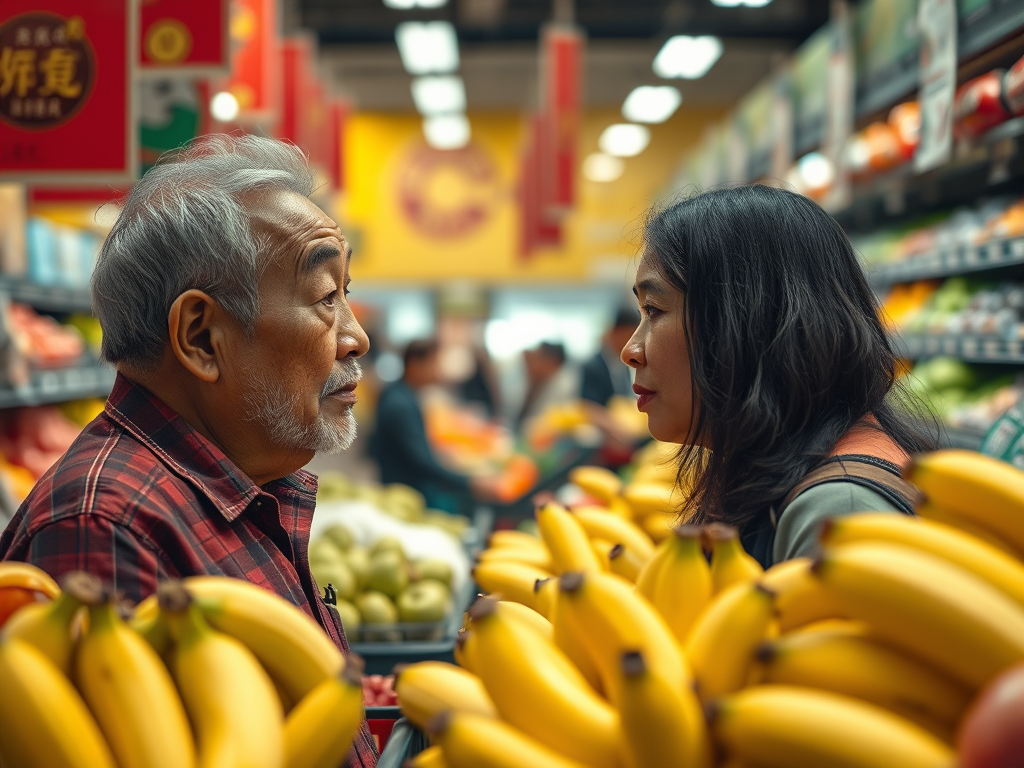
I was standing in the produce section of my local grocery store last week, debating on the difference between organic and regular bananas (because apparently this is what passes for major life decisions in your thirties), when I thought about Karissa Chen’s Homeseeking. I thought about Haiwen—her protagonist who’s doing the exact same thing in a 99 Ranch Market in Los Angeles when his entire world shifts.
He looks up from the bananas and sees Suchi. His Suchi. After sixty years.
There’s something about that moment—the ordinariness of it—that undoes me every time. Because isn’t this how life actually happens? Not in grand gestures but in the little moments of a Tuesday afternoon grocery run.
When Stories Find Their Way Home
Chen and I have never met, but I feel like I know her in that way you sometimes know writers whose work reaches directly into your chest and rearranges something. Maybe it’s because her story began the way so many of ours do—with family secrets and old photographs that raise more questions than they answer.
Her grandfather’s photo of him weeping at his mother’s grave in Shanghai, a reunion that came half a century too late. He’d fled China just before the Communist victory in 1949, thinking that the separation would be temporary. The kind of “temporary” that stretches across entire lifetimes.
“I had long been researching the stories of people who had fled to Taiwan from China after the Chinese Civil War,” Chen told an interviewer, “but I was never sure how to frame the story, how best to tell these stories.”
I know this feeling. We all have stories we carry but can’t quite access, can’t quite shape into something that makes sense. For Chen, the key came during a conversation with an old friend—someone from her teenage years, someone who carried their own pocket of “what if.”
Sometimes that’s all it takes. A single conversation to crack open the story that’s been waiting inside you all along.
The Memory
What Chen created in response to that conversation is something extraordinary. A novel that moves in two directions at once, like memory itself. Haiwen’s story unfolds backward from 2008 to his childhood, the way we actually revisit trauma, peeling back layers, trying to understand how we got here. Suchi’s moves forward from their childhood to the present. The way we survive, by putting one foot in front of the other, refusing to look back.
They meet in the middle, in the space where their lives first intertwined.
I’ve read a lot of novels with complex structures, but this one feels different. It doesn’t call attention to its own cleverness. Instead, it mirrors something true about how we carry the past. Some of us diving into it like archaeologists, others running from it like it’s a house on fire.
Chen wanted to explore “the different ways in which people deal with trauma.” What she ended up creating was the “big picture’ of the human heart under pressure.
The Geography of Belonging
Here’s what stopped me when I read Homeseeking, Chen’s understanding that home isn’t a place. In one of the novel’s most devastating passages, Suchi realizes that “home wasn’t a place. It wasn’t moments that could be pinned down. It was people, people who share the same ghosts as you, folks long gone, places long disappeared. People who knew you, saw you, loved you.”
I read that paragraph three times before I could move on. Because isn’t this what we’re all trying to figure out? How to find home in a world that keeps shifting under our feet?
Chen knows something about displacement. She’s a Fulbright fellow who splits her time between New Jersey and Taipei, the editor-in-chief of Hyphen magazine, a voice that bridges cultures and experiences. Her essays have appeared in The New York Times, The Atlantic, People, and Guernica. But more than her impressive resume, what strikes me is her understanding of what it means to live between worlds.
“I used to say that I was writing for a younger version of myself,” she reflects, “for someone like me—a Chinese Taiwanese American who craved an understanding of their history, who wanted to see themselves and their family reflected in literature.”
This isn’t just about representation. This is about recognition. The deep, necessary work of saying: you exist, your story matters, the particular way you move through the world has value.
Persistence and Faith
Here’s what I love most about Chen’s path to publication: her honesty about the mess of it. “I have at least one failed manuscript sitting in a folder on my hard drive and several other halfway written novels that I tell myself that I will get back to someday,” she admits. “What set this book apart is that I cared enough about it to really see it through—I finally had the stamina that writing a novel required.”
The stamina. Yes. Because writing a novel isn’t just about talent or inspiration—it’s about showing up to the same story, day after day, even when you’re not sure it’s working. Even when you’re pretty sure it isn’t.
Chen’s advice to other writers is simple and important: “If you keep knocking, one day someone will open a door.” She talks about periods of self-doubt, stretches where she felt she’d never write anything good again. But she kept returning to her desk.
There’s something deeply comforting about this admission. In a world that loves overnight success stories, Chen reminds us that most good things take time. That persistence is its own form of faith.
What We’re Really Talking About
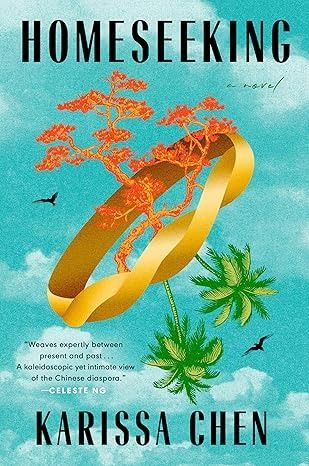
Homeseeking has been chosen as a Good Morning America Book Club pick, which means it’s about to reach thousands of readers who need exactly this story right now. Because while it’s ostensibly about two lovers separated by war and exile, it’s really about something much larger: how we survive the things that break us. How we find our way back to each other across impossible distances.
The San Francisco Chronicle called it an “epic.” and they’re right. But it’s the kind of epic that happens in grocery stores and phone calls and the quiet moments when we realize that the person we used to be is still there, waiting for us to remember.
In our current moment—when so many of us are struggling with our own forms of displacement, our own questions about home and belonging—Chen offers something precious: the reminder that love can be patient enough to wait sixty years. That some connections run deeper than circumstance.
I finished Homeseeking sitting in my kitchen with coffee growing cold in my hands. I thought about Haiwen and Suchi, about the weight of all the stories we carry, about the grace of being seen by someone who shares your ghosts.
Then I thought about Chen herself. This writer who turned family photographs and conversations with old friends into something that feels like a prayer. Who understood that sometimes the most important stories are the ones that take their time revealing themselves.
If you’re looking for your next read, if you want something that will remind you why storytelling matters, why love stories aren’t just escapism but acts of faith—pick up Homeseeking. Trust me on this one.
And maybe, just maybe, pay attention the next time you’re buying bananas. You never know what kind of story might be waiting in the produce aisle.



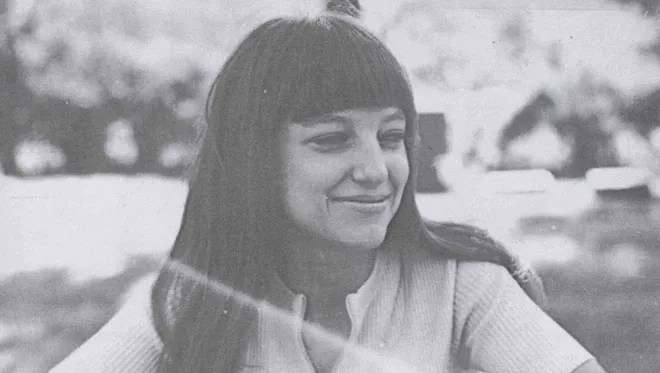


 Kat McAdaragh
Leave a comment