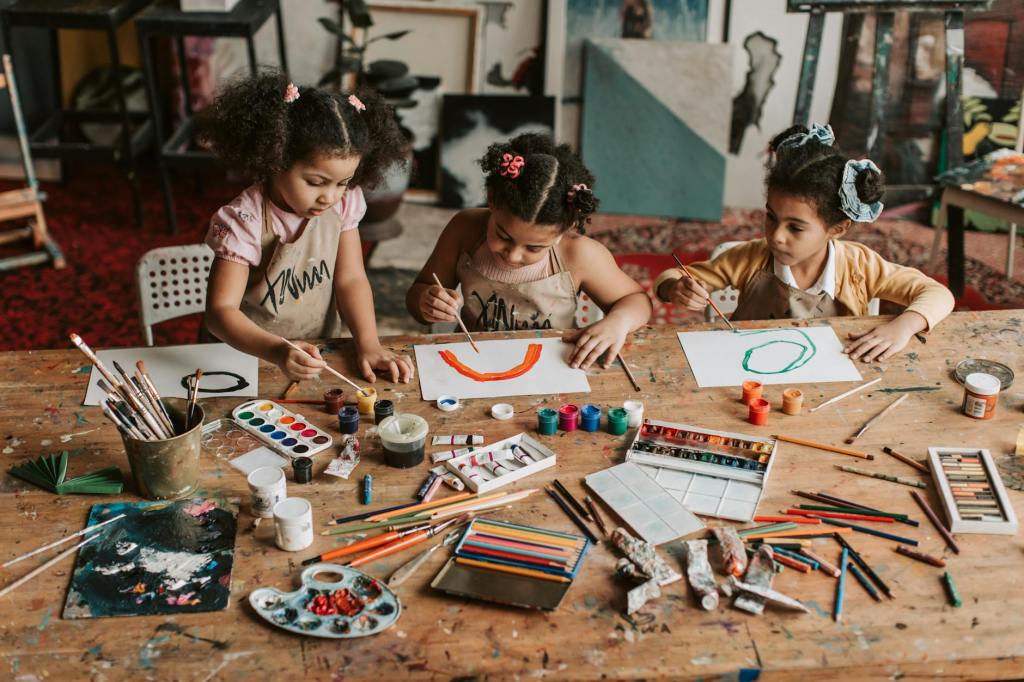
I used to have three uninterrupted hours every morning to create. My desk was pristine, my supplies organized by colors, my creative practices as consistent as breathing. Then I became a mother, and suddenly my art felt like a luxury I could no longer afford.
The transition hit me like a train. Where I once had unlimited time to dive deep into projects, I now had stolen moments between kid activities and appointments. My beautiful, organized workspace became a storage area for random broken toys needing to be fixed, out-grown soccer gear, and laundry. My creative identity felt buried under an avalanche of mismatched socks and sleepless nights.
For years, I’ve mourned my old creative life. I told myself I’d return to “real” art once the kids were older, once life settled down, once I had time again. But waiting for the perfect conditions felt like putting my soul on hold indefinitely.
The Shift from Perfection to Presence
The breakthrough came on a particularly chaotic Tuesday morning. My toddler had dumped an entire container of crayons on the kitchen floor while my teenagers fought in the background. Instead of my usual frustrated cleanup, I found myself noticing the beautiful scatter of colors across the floor—cerulean, blue next to burnt orange, forest green rolling toward sunshine yellow.
I grabbed my phone and took a picture. Not for social media, but for me. In that moment of overwhelm, I’d found something beautiful. I realized I’d been waiting for my old creative life to return instead of discovering what creativity could look like in this chapter of my life.
That afternoon, while the kids were in school, I didn’t rush to tackle my endless to-do list. Instead, I pulled out my laptop and wrote a few paragraphs. It took twelve minutes—the shortest creative session of my adult life—but it filled me up in a way I’d forgotten was possible.
Micro-Moments, Macro Impact
I started collecting these micro-moments of creativity like precious stones. Five minutes of journaling while coffee brewed. Photographing the way afternoon light hit my son’s toys. Writing single sentences in a notebook I kept in our travel bag on daily accomplishments.
These weren’t the huge artistic statements I used to make, but they were something more essential—they were proof that the creative spirit doesn’t disappear when life gets complicated; it adapts.
I learned to create in waiting rooms during appointments, turning doctor’s office magazines into collage material in my mind. I wrote short stories while my child played in the playground, letting his laughter become inspiration. I started seeing my everyday life not as an obstacle to creativity, but as raw material for it.
Redefining Creative Success
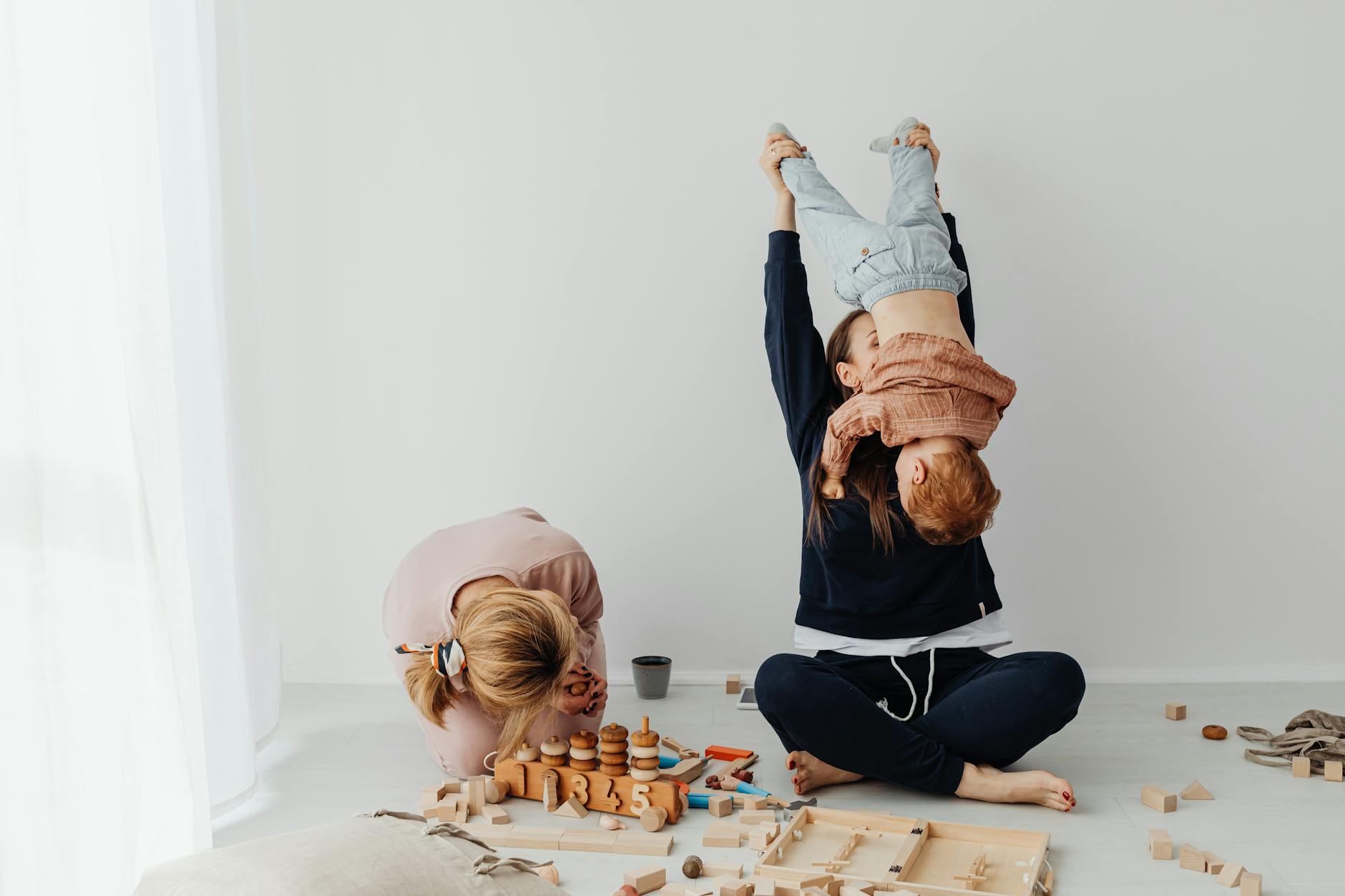
The hardest part wasn’t finding time to create—it was releasing my old definitions of what creativity had to look like. I had to grieve the loss of those luxurious quiet hours, the ability to lose myself completely in a project for days at a time. But in that grieving, I discovered that constraints can be creative solutions.
When you only have fifteen minutes, you get to the essence quickly. When your materials are limited to whatever’s within arm’s reach, you become resourceful in ways that surprise you. When perfectionism isn’t an option because your child might interrupt at any given moment, you learn to embrace the unfinished.
My art changed. It became more immediate, more honest, more alive. The writings I created in the in-between moments had an urgency and authenticity that my previous work lacked. The short stories I scribbled while cuddling my son to sleep captured truths about love and exhaustion that I never could have accessed in my old, quiet creative space.
Integration at It’s Finest
I stopped trying to separate my creative life from my mom life, and started weaving them together.
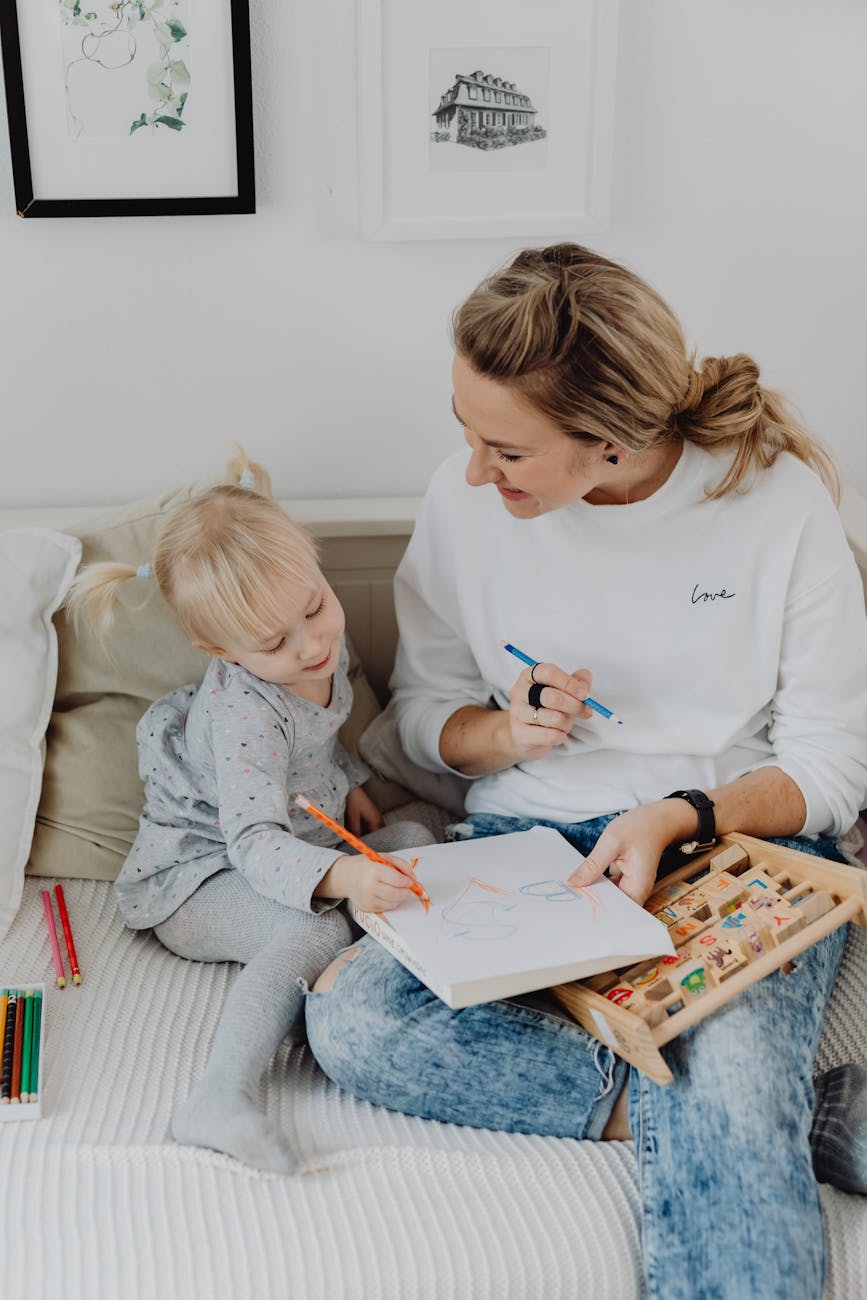
My children became my collaborators, their chaos and wonder infusing my work with new energy. I painted with finger paints alongside my son, both of us discovering what happened when yellow met blue. I wrote lullabies that were really poems, songs that captured the weight of 3 AM fevers and the magic of first-time milestones.
The kitchen table became my studio. Kid bedtime became my creative time. Bedtime stories became opportunities. I learned that creativity doesn’t require a perfect space or unlimited time—it requires showing up, however briefly, however imperfectly, to the practice of making meaning from the materials of your life.
Permission to Begin Again
If you’re a creative parent reading this in the thick of tiny-human chaos, know this: your creative self isn’t lost. It’s transforming. The artist you’re becoming through parenthood may look different from who you were before, but different doesn’t mean diminished.
Start where you are. Use what you have. Create in the margins, in the mess, in the beautiful ordinary moments that make up your days. Your art doesn’t need to be precious or perfect—it needs to be yours.
The chaos isn’t your creative enemy; it’s your teacher, showing you new ways to make beauty from the fragments of an interrupted life. And sometimes, the most impactful art comes not from the quiet studio, but from the noisy, joyful, exhausting reality of loving small humans while refusing to let go of the part of yourself that must create.
Your creativity is not a luxury—it’s essential. And it’s waiting for you right here, in the mess of now.




 Kat McAdaragh
Leave a comment