
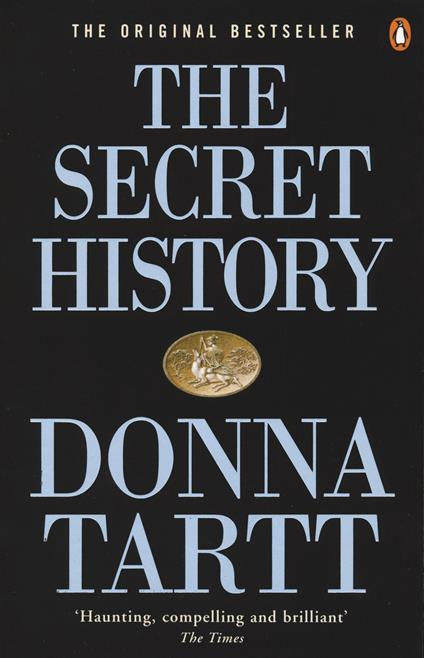
Book Review: The Secret History
There’s something intoxicating about watching beautiful people make terrible choices. Donna Tartt understands this impulse perfectly when writing The Secret History, a novel that seduces readers into complicity with its morally bankrupt characters while simultaneously horrifying us with their actions.
Published in 1992, Tartt’s novel remains a masterpiece in storytelling and psychological manipulation. The story follows Richard Papen, a working-class Californian who becomes entranced by an elite group of classic students at the fictional Hampden College in Vermont. Led by Professor Julian Morrow, the students—Henry, Bunny, Charles, Camilla, and Francis—live in a world of Greek philosophy, expensive tastes, and deadly secrets.
What makes The Secret History so compelling is Tartt’s bold narrative choice to reveal the murder within the first few pages. This isn’t a whodunit but a “why-and-how-did-it-come-to-this.” The inevitability of tragedy hangs over every scene, creating a sense of dread that propels the reader through nearly 600 pages with breathless urgency.
Tartt writes with the precision of a surgeon and the soul of a poet, crafting sentences that demand to be read aloud. Her descriptions of the Vermont landscape are so vivid that you can smell the autumn leaves and feel the bite of winter air. But it’s her psychological portraits that truly shine—each character is rendered with such complexity that you find yourself understanding their motivations even as you’re appalled by their actions.
The novel’s exploration of beauty, morality, and the dangerous allure of intellectual elitism feels remarkably prescient. In our current age of social media and performative intelligence, the characters’ obsession with appearing sophisticated while harboring dark impulses resonates with uncomfortable familiarity. Henry Winter, the group’s leader, embodies this contradiction perfectly— a brilliant aesthete whose pursuit of pure experience leads to monstrous acts.
Yet The Secret History is more than just a cautionary tale about privilege and morality. It’s a meditation on friendship, belonging, and the lengths people will go to maintain their place in a chosen family. Richard’s desperation to belong to this group, despite increasingly clear warning signs, speaks to universal human desires of acceptance and transformation.
The pacing occasionally falters in the middle sections, and some readers may find the characters’ pretensions insufferable rather than fascinating. But these are minor issues with a work that achieves something rare: it makes you question your own moral compass while delivering a story you simply cannot put down.
Tartt spent a decade writing this novel, and it shows in every constructed scene. The Secret History is a rarity in literary achievements—a book that works both as a page-turning thriller and a profound examination of human nature. It’s a dark mirror held up to our own capacity for self-deception and moral compromise.
Nearly three decades after its publication, The Secret History continues to captivate new generations of readers. It’s a testament to Tartt’s skill that a story about such deeply flawed characters can feel so essential, so human. This is literature at its most dangerous and most necessary—beautiful, terrible, and unforgettable.
Rating: ★★★★★
Perfect for readers who loved If We Were Villains by M.L. Rio or The Goldfinch by Donna Tartt. Content warning for violence, substance abuse, and morally complex characters.







 Kat McAdaragh
Leave a comment