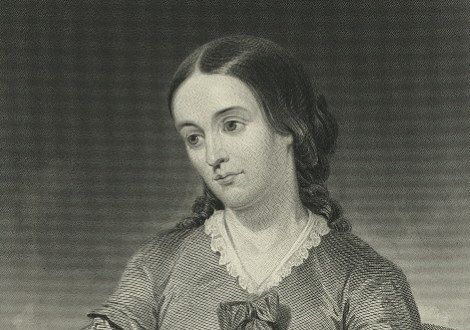
Picture this: It’s 1840, and in a Boston parlor, a woman with piercing eyes and an even sharper mind is holding everyone’s attention. She’s asking questions that make the refined ladies shift uncomfortably in their chairs. What if women could be more than wives and mothers? What if we stopped apologizing for our ambitions? What if we claim our right to think?
The woman orchestrating this revolution was Margaret Fuller, and she was about to blow up every assumption 19th-century America had about what women could be and do. She’d go on to write the book that would launch American feminism, become the first female war correspondent, fall in love with an Italian revolutionary, and die in a shipwreck at the age of 40, taking the manuscripts that might have changed how we remember her today.
But most people have never heard of her. And that’s a crime against history.
The Prodigy Who Refused
Margaret Fuller was born in 1810 in Massachusetts, and from day one, she was clearly destined for great things. Her father, Timothy Fuller, decided to educate her exactly as he would a son—which was pretty radical for the time. While other girls were learning embroidery and piano, Margaret was devouring Latin classics at the age of six and reading multiple languages by her teens.
But what makes her story so compelling is that she didn’t just absorb this knowledge passively. She questioned everything, challenged everyone, and refused to accept the limitation society tried to place on her mind.
The Conversation That Changed Everything
In 1839, Fuller started hosting these incredible “Conversations” in Boston. Think of them as the original intellectual salons. For five years, she gathered groups of educated women (and eventually some men) to discuss philosophy, literature, and the big question of existence. These weren’t your typical ladies’ tea parties. Fuller was asking questions. What is the nature of Woman? How can she best discharge her duties? What is the destiny of Woman?
Pretty radical stuff for the 1840s.
One participant described Fuller as having “the most entertaining, wise, witty, and instructive” conversation she’d ever heard. These gatherings became legendary, creating a space where women could flex their intellectual muscles in ways society typically didn’t allow.
“Woman in the Nineteenth Century”
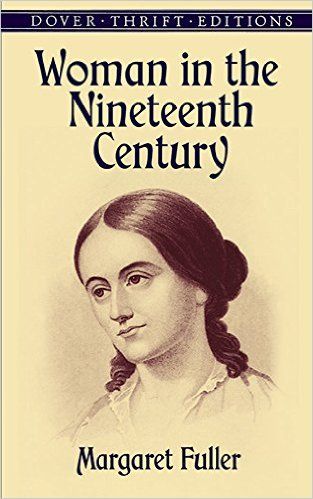
In 1845, Fuller published what many consider the first major feminist work in America, Woman in the Nineteenth Century. The book was a 200-page argument for why women deserve the same opportunities as men. Sounds obvious now, but in 1845, this was borderline scandalous.
Fuller wrote, “We would have every arbitrary barrier thrown down. We would have every path laid open to Woman as freely as to Man.” She argued that women should be able to pursue any career, should have the right to vote, and most radically, should be able to remain unmarried without being considered failures.
The book was an immediate sensation. People either loved it or hated it, but everyone was talking about it.
America’s First Female Foreign Correspondent
Just when Fuller’s story couldn’t get more impressive, she becomes the first woman to work as a foreign correspondent for a major American newspaper. In 1846, she sailed to Europe to write for the New York Tribune, sending back dispatches that would help American readers understand the revolutionary upheavals happening across the continent.
But Fuller wasn’t content to just observe history—she lived it. In Italy, she fell in love with Giovanni Ossoli, a younger Italian revolutionary. They had a son together and likely married (though documentation isn’t clear). Fuller found herself not just reporting on the Roman Revolution of 1848-49, but actively participating in it, helping to run a hospital and supporting the republican cause.
The Tragic End
Here’s where the story takes a heartbreaking turn. In 1850, Fuller, Ossoli, and their son boarded a ship to return to America. They were bringing manuscripts of Fuller’s work on the Roman Revolution—writing that could have cemented her reputation as one of America’s great chroniclers of her age.
The ship wrecked in a storm just off Fire Island, New York. All three died. Fuller’s body was never found, and her manuscripts were lost forever.
Margaret Fuller’s Impact
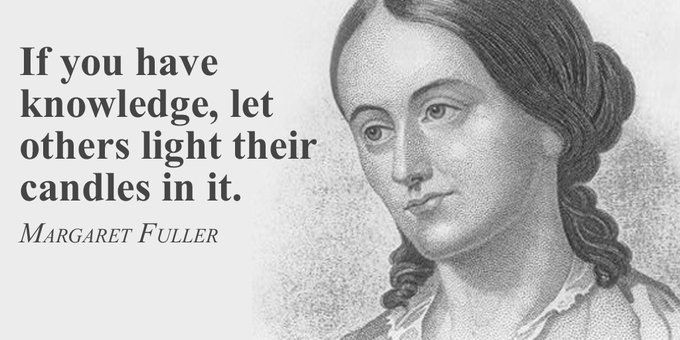
Fuller’s death at just 40 robbed America of one of its most original thinkers. But her influence lived in ways both obvious and subtle. She directly inspired the women’s rights movement—Susan B. Anthony and Elizabeth Cady Stanton both cited her work. Her ideas about women’s potential helped shape the thinking of the Seneca Falls Convention in 1848.
But more than that, Fuller embodied something we still struggle with today. The idea that women can be intellectually ambitious, professionally successful, and personally unconventional without apology. She refused to choose between her mind and her heart, her career and her family, her American identity and her global perspective.
The Woman Who Was Right All Along
If Margaret Fuller walked into a coffee shop today, she’d probably order her drink exactly how she wanted it, sit down with her laptop, and start writing about why women still apologize for taking up space. She’d be tweeting bold truths, challenging conventional wisdom, and making everyone slightly uncomfortable with her refusal to dim her brightness for anyone’s comfort.
She wrote, “I now know all the people worth knowing in America, and I find no intellect comparable to my own.” Some called it arrogance. I call it the confidence we’re still teaching women to claim.
In our current moment, when we’re having renewed conversations about women’s roles, women’s voices, and women’s potential, Margaret Fuller feels like a prophet of sorts, born 150 years too soon. She saw what women could become long before the world was ready to listen.
The next time someone asks you about the origins of American feminism, don’t start with Betty Friedan or Gloria Steinem. Start with Margaret Fuller—the woman who asked the hard questions, demanded better answers, and forever changed the conversation.





 Kat McAdaragh
Leave a comment