
Have you ever written a love letter you knew you could never send? Poured your heart onto paper knowing that the very act of loving made you dangerous—not just to yourself, but to everyone around you?
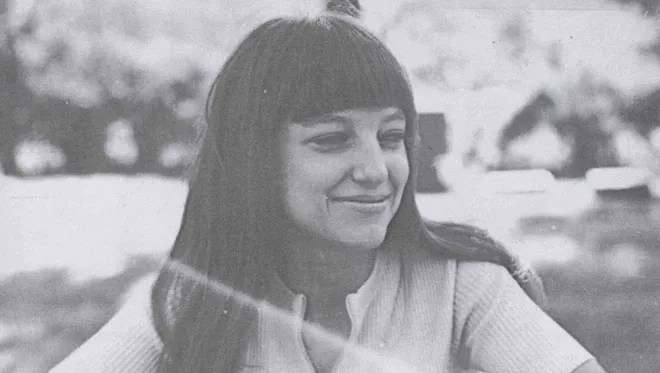
Angelina Weld Grimké lived her entire life writing those unsendable love letters. In an era when being Black meant fighting for basic humanity, and being a woman meant accepting limitations, and loving other women meant risking everything. Angelina chose love anyway. She just had to hide it in the metaphors, bury it in symbols, and whisper it through poetry that most people would never fully understand.
She was a master of the coded message, the double entendre, the love poem disguised as a nature verse. And in doing so, she became one of America’s most important—and most invisible—queer poets of the Harlem Renaissance.
A Girl Caught Between Worlds
Born in Boston in 1880, Angelina Weld Grimké carried history in her very name. Her great-aunts were the famous Grimké sisters—white abolitionists who’d shocked the South by speaking out against slavery. Her father, Archibald Grimké, was the biracial son of a white plantation owner and an enslaved woman. Her mother, Sarah Stanley, was white and from a prominent Boston family.
This should have been a love story—an interracial couple defying convention in progressive Boston. But instead, it was a tragedy. Sarah left when Angelina was just three years old, unable to handle the social pressure of being married to a Black man. She never returned, leaving Angelina to wonder for the rest of her life what it meant to be abandoned by the person who was supposed to love you unconditionally.
Growing up, Angelina was caught between worlds—too light to be fully accepted in Black communities, too Black to be welcomed into white spaces, too different to fit anywhere completely. Maybe this early experience of not belonging prepared her for the lifetime of loving in the margins.
A Teacher Who Dreamed in Verse
After graduating from Radcliffe College—one of the few Black women colleges of her generation—Angelina became a teacher at the prestigious M Street High School in Washington, D.C. (the same school where Anna Julia Cooper had been principal). By day, she taught English and drama to the children of Black Washington’s elite. By night, she wrote poetry that burned with longing she could never express openly.
Her poems from this period read like love letters written in code, “A Mona Lisa” speaks of a woman whose “wistful, wonderful eyes” haunt its speaker. “Rosabel” describes a love so intense it “hurt-hurt-hurt.” “The Eyes of My Regret” mourns a lost love with lines like: “Always I see your eyes that never, never forget/ The love that gave them birth, the love they could not keep.”
To casual readers, these might have seemed like conventional romantic poetry. But read them again, pay attention to the pronouns (or lack thereof), notice how carefully Angelina avoids gendering her beloved, and a different story emerges—one of a woman loving other women in a world that offered no language for such a love.
The Playwright
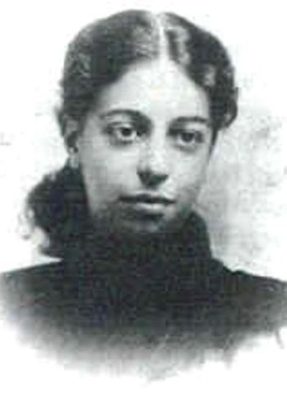
In 1916, Angelina wrote “Rachel.” a play that would make her famous and controversial in equal standings. On the surface, it was about a young Black woman who decides never to have children rather than bring them into a world poisoned by racism. The play was groundbreaking—one of the first serious dramas by a Black woman to be professionally produced.
But “Rachel” was so deeply personal. The protagonist’s decision to remain childless, to choose a life outside conventional domesticity, mirrored Angelina’s own choices. In a world where Black women were expected to be pillars of strength, devoted mothers, and respectable wives, Angelina was writing about women who chose different paths.
The play sparked fierce debate in Black intellectual circles. Some praised it as a powerful indictment of American racism. Others criticized it as too pessimistic, worried that it reinforced negative stereotypes. What they missed was the quiet revolution in its center—a woman claiming the right to define her own life, even if it meant rejecting society’s most sacred expectations.
A Lover in Symbols
Angelina’s most passionate poetry was inspired by her relationships with women—particularly her deep, intense friendships that may have been something more. Her correspondence reveals a woman capable of profound emotional connection, someone who formed intense bonds with other women that sustained her through decades of loneliness.
One relationship that particularly shaped her work was with Mamie Burrill, a fellow teacher and writer. Their letters beam with affection, longing, and the kind of emotional intimacy that suggests their connection went beyond friendship. Angelina wrote to Mamie, “You are never out of my thoughts… I love you, I love you, I love you.”
But in an era when such relationships had no social recognition and could destroy careers and reputations, Angelina had to love carefully. Her poetry became a safe space where she could express feelings that had no other outlet. Lines like “I kiss you across the years and years” take on new meaning when you understand the context of forced separation and social disapproval.
The Artist Who Paid the Price
Living as a queer woman in early 20th-century America meant living with constant vigilance. Angelina had to be careful about who she loved, how she expressed that love, and who she trusted with her truth. The emotional toll was beyond measure.
By the 1920s, as the Harlem Renaissance flourished around her, Angelina seemed to withdraw from public life. While her contemporaries like Langston Hughes and Claude McKay were gaining national recognition, she retreated into teaching and private writing. Some scholars suggest this withdrawal was due to the strain of hiding her true self and constantly having to code her deepest feelings into acceptable forms.
She never married, never had children, and lived most of her later life in isolation. When she died in 1958, much of her personal writing remained unpublished, hidden away like the love letters she could never send.
The Legacy
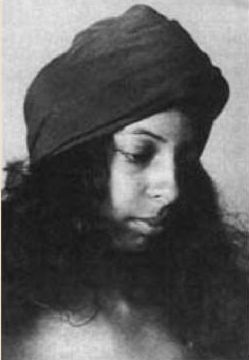
For decades after her death, Angelina Weld Grimké was remembered mostly as the author of “Rachel” and a few nature poems. Literary scholars, working within frameworks that assumed heterosexuality unless proven otherwise, missed the deeper currents in her works.
It wasn’t until the rise of queer literary criticism in the 1980s and 1990s that scholars began noticing Angelina’s work with fresh eyes. Suddenly, poems that had seemed merely melancholy revealed themselves as passionate love songs. Letters that had been dismissed as typical female friendships showed evidence of deep romantic attachments.
The reinterpretation wasn’t just academic—it was an act of reclamation. Angelina had spent her life hiding her truth in plain sight, using the tools available to her to preserve something of her authentic self. Decades later, scholars were finally learning to read her code.
The Impact on Today
When I encounter discussions about “representation” in literature, I think of Angelina. There’s sometimes an assumption that LGBTQ+ voices in literature are a recent phenomenon, that queer writers didn’t exist before Stonewall, that the closet was simply an empty space.
But Angelina reminds us that queer people have always existed, have always been writing, have always been finding ways to tell their stories even when direct expressions wasn’t possible. She shows us what survival looked like for someone who loved differently in an unforgiving world.
Her poetry teaches us to read between the lines, to understand that absence can be as meaningful as presence, that silence can be its own form of speech. When she wrote about “the love that gave them birth, the love they could not keep,” she was documenting not just personal loss, but a kind of historical erasure—the systematic silencing of love that didn’t fit acceptable patterns.
Hidden Love
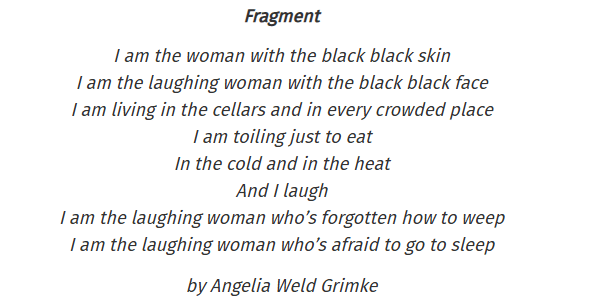
What strikes me most about Angelina is how she managed to preserve her truth even under impossible circumstances. She couldn’t love openly, but she loved anyway. She couldn’t write directly about her desires, but she found ways to encode them that would survive. She couldn’t live as her full self in public, but she refused to let that self disappear entirely.
This takes courage—not the dramatic courage of public declaration, but the quiet courage of daily survival, of maintaining your humanity when the world insists you don’t deserve to exist as you are.
Angelina Weld Grimké spent her life writing love letters she thought she could never send. But she was wrong. She did send them—to us, across the decades, coded in metaphor and hidden verses. And finally, we’re learning how to read them.
In a world where LGBTQ+ people, especially queer people of color, still face violence and discrimination for loving authentically, Angelina’s story feels both historical and urgently contemporary. She reminds us that love finds a way, even in the shadows.
The poet who loved in the margins left us a map for how to survive in a world that doesn’t want us to exist. That might be the most important love letter of all.
Angelina Weld Grimké’s collected poetry can be found in several anthologies of African American and LGBTQ+ literature. Her play “Rachel” was recently revived by several theater companies interested in exploring early Black feminist drama.




 Kat McAdaragh
Leave a comment