Have you ever written something that you knew would change everything? Something that felt both terrifying and necessary, like standing at the edge of a cliff with wings you weren’t sure would work?
In 1773, a young Black woman named Phillis Wheatley found herself in this very place. She was about to become the first African American to publish a book of poetry—but not before eighteen of Boston’s most prominent white men interrogated her to prove she was actually capable of writing it.
Picture this: a teenager, enslaved, sitting before a panel of men who held her fate in their hands. They peppered her with questions about Latin, mythology, and biblical references, searching for any crack in her intellectual armor. They couldn’t fathom that someone who looked like her, someone who had been torn from her homeland at the age of seven or eight, could craft verses that rivaled their own educated sons.
But Phillis wasn’t just any young woman. She was a literary revolutionary wrapped in the packaging of a proper Boston lady.
The Girl Who Rewrote the Rules
When Phillis arrived in Boston around 1761, she was just a child—scared, speaking no English, and bearing only the name of the ship that had carried her across the Atlantic: Phillis. The Wheatley family, who purchased her, gave her their surname and something far more dangerous: literacy.
This wasn’t charity. It was an accident. The Wheatleys noticed young Phillis scratching letters in the dirt and, more out of curiosity than kindness, began teaching her to read. Within sixteen months, she was devouring the Bible, Latin classics, and contemporary poetry. By her teens, she was writing verses that would make grown men question everything they thought they knew about race, intelligence, and human potential.
Her poetry was subversive in ways that still take my breath away. While enslaved people were considered property, Phillis wrote herself into being as a thinking, feeling, spiritually complex human being. Every line was an act of rebellion.
The Quiet Revolutionary
What piqued my interest about Phillis isn’t just her brilliance, but her strategy. She understood that in 1770s America, a Black woman couldn’t simply stand up and demand to be heard. So she wrapped her ideas in the acceptable language of her time—classical references, Christian imagery, and formal poetic structures that white audiences would recognized as “proper” literature.
But when you look closer at her work, you’ll find something remarkable. In “On Being Brought from Pagan Land,” she writes:
“Twas mercy brought me from my Pagan land, Taught my benighted soul to understand That there’s a God, that there’s a Saviour too: Once I redemption neither sought nor knew.”
On the surface, this seems to accept the narrative of slavery as salvation. But read it again. Phillis positions herself as the enlightened speaker, educating white readers about mercy and redemption. She’s not grateful, she’s teaching. The student has become the master, and she’s doing it so subtly that her audience doesn’t even realize they are being schooled.
The Weight of Proof
The interrogation Phillis faced in 1772 breaks my heart every time I think about it. Imagine being eighteen years old and having to prove your humanity to a room full of men who had already decided you were less than human. The questions weren’t just about her poetry—they were about whether she deserved to exist as anything more than property.
She passed their test, of course. How could she not? These men were questioning someone who could discuss Alexander Pope’s heroic couplets, analyze biblical imagery, and craft her own elegant verses in multiple classical forms. But the fact that she had to prove herself at all reveals everything about the world she was trying to change.
Her book, Poems on Various Subjects, Religious and Moral, was published in London in 1773 because no American publisher would touch it. Even with the testimonials of eighteen prominent Bostonians confirming her authorship, American publishers couldn’t stomach the idea of a Black woman as a legitimate author.
The Revolutionary Hiding in Plain Sight
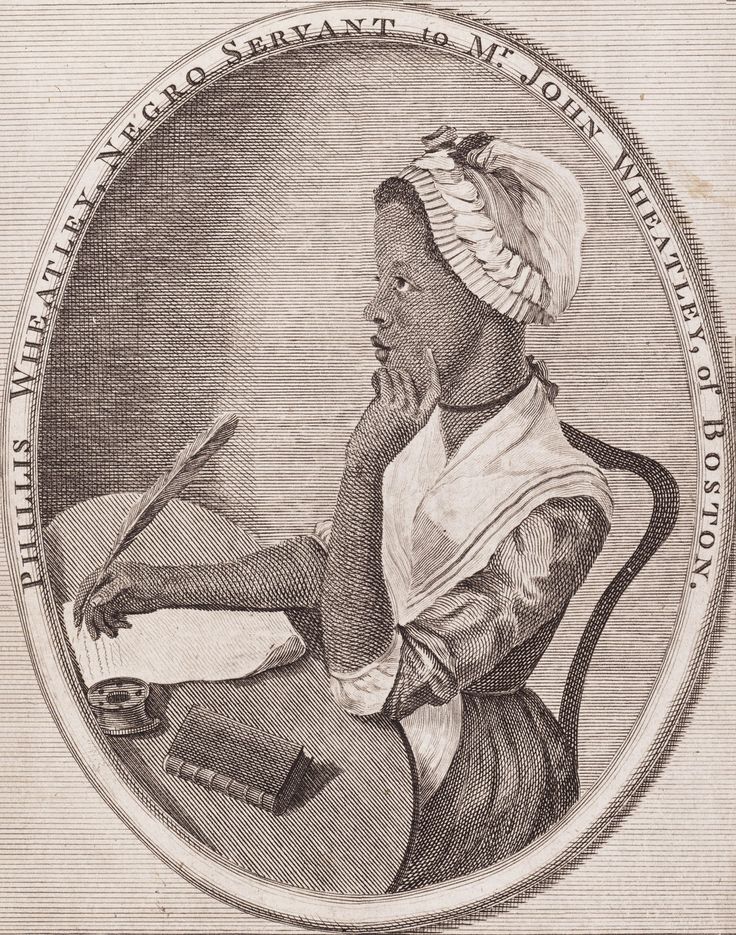
What makes Phillis truly revolutionary isn’t just that she wrote—it’s how she wrote. Every poem was a quiet declaration of independence. When she addressed George Washington, she didn’t frovel or plead. She wrote as an equal, offering him her poetic gifts and wisdom. When she wrote eulogies for deceased infants, she positioned herself as a spiritual guide, someone with the authority to speak about life, death, and divine purpose.
She understood something that many of us are still learning. Sometimes the most powerful revolution happens not with swords or protests, but with the simple act of insisting on your own humanity when the world tells you that you have none.
The Price of Being First
Being a revolutionary is lonely work, and Phillis paid the price. She was caught between worlds—too educated for most enslaved people to relate to, and too Black for white literary society to fully accept. When her owners died and her book sales couldn’t sustain her, she married a free Black man named John Peters and struggled with poverty for the rest of her short life.
She died at thirty-one, in obscurity, probably from complications related to childbirth and poverty. The woman who had corresponded with George Washington and been celebrated in London died forgotten in a Boston boarding house.
But here’s what her critics—then and now—miss: Phillis wasn’t trying to be acceptable. She was trying to be free. And she found that freedom in the one place no one could take it away from her—in her words, her mind, and her insistence on her own intellectual dignity.
Why We Should Remember Phillis
I think about Phillis often, especially when I’m struggling with my own voice as a writer. She reminds me that every woman who has ever put pen to paper owes something to the young girl who sat in the room in 1772 and refused to be silenced.
She showed us that revolution doesn’t always look like what we expect. Sometimes it looks like a teenager mastering Latin while enslaved. Sometimes it looks like writing your way to freedom, one poem at a time. Sometimes it looks like insisting on your own humanity when the whole world tells you that you have none.
Phillis Wheatley didn’t just write poetry. She wrote herself into existence, and in doing so, she wrote all of us into possibility. She proved that brilliance has no color, that genius recognizes no chains, and that sometimes the most powerful thing you can do is simply refuse to be what the world insists you must be.
In a world that still tries to silence women, especially women of color, Phillis Wheatley remains gloriously, defiantly, revolutionarily herself. And that, more than any single poem, might be her greatest work.
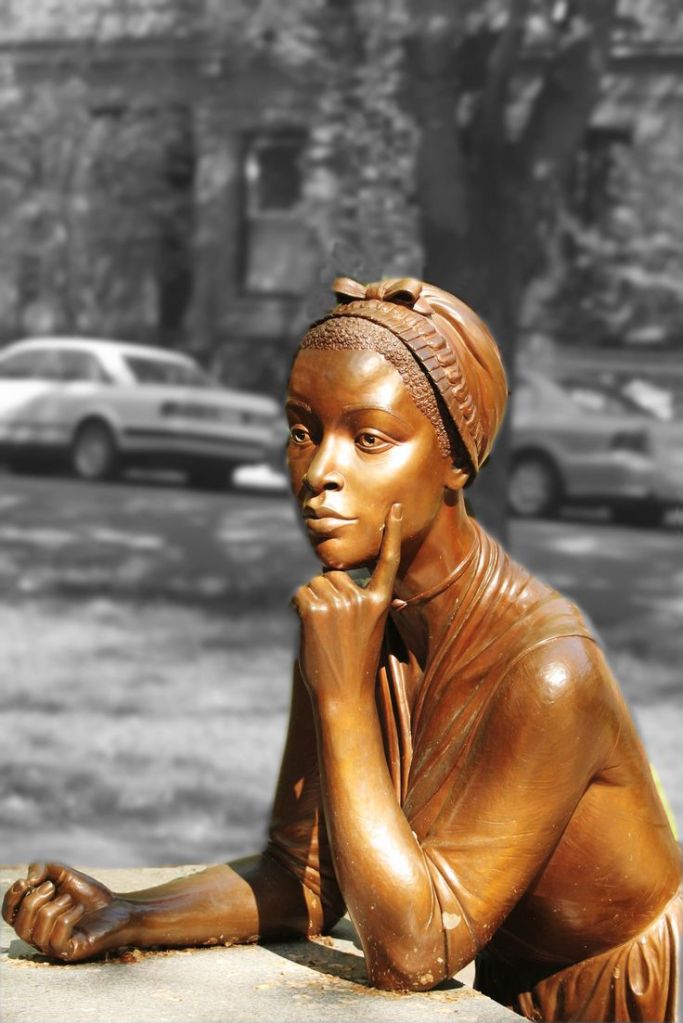
Phillis Wheatley’s complete works remain in print today, a testament to a voice that refused to be silenced. Her poetry continues to inspire readers and writers who understand that sometimes the most radical act is simply insisting on your right to be heard.



 Kat McAdaragh
Leave a comment