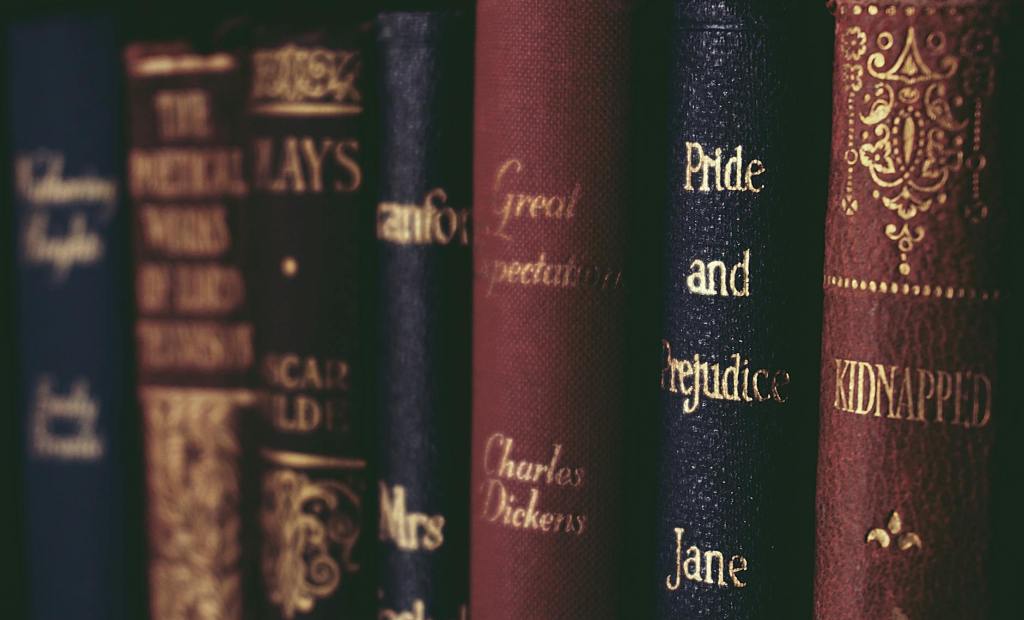
Let me ask you something— What makes a book a classic? Have you ever thought about how a novel becomes a timeless piece living decades or centuries into the future?
It’s not just its age or placement on the dusty book shelves of bookstores and libraries— it’s the power it holds in shaping thought, stirring emotions, and reflecting (or challenging) the world around us. The true classic lingers. It teaches. It resists. And it keeps speaking, even when the noises of the world grow louder.
As a writer and avid reader invested in women’s voices, cultural memories, and literary legacies, I often wonder what books our granddaughters will study and read in the future, in the same way that we have studied Woolf, Morrison, or Plath.
So today, I am sharing five books that I truly believe will stand the test of time. They’re all by contemporary authors— many of them women, many from marginalized backgrounds— who are changing not just the conversation but the literary canon itself.
- In the Dream House by Carmen Maria Machado
This novel completely redefined what a memoir can be. It’s not a straightforward narrative— it’s fragmented and genre-blending. Each chapter takes on a new literary form (Gothic horror, legal briefing, Choose Your Own Adventure) to document Machado’s experiences in an abusive queer relationship.
The novel will last because it fills a void no one else dares to name. Because it forces us to look at the complexities of abuse outside hetero-normative frameworks. Because it doesn’t just tell a story— it breaks the structure and rebuilds it into something fully revolutionary.
“Sometimes survivors must rewrite the narrative. The one they have been given does not suit them. Does not fit.”
We’ve seen the memoirs of trauma before, but nothing like this— woven with theory, culture, horror, and breathtaking prose. Future readers will not just study this for its subject— they’ll study it for how it completely changed its form right before our very eyes.

2. Sing, Unburied, Sing by Jesmyn Ward
Jesmyn Ward, in my opinion, is one of the greatest living American novelists of our time. Sing, Unburied, Sing feels like Faulkner crossed paths with Morrison— only she makes it entirely her own. The novel follows Jojo, a Black boy growing up in Mississippi, as his family grapples with addiction, racism, and literal ghosts.
What makes this a future classic is not just the beauty of the writing itself (which is absolutely stunning)— it’s the moral gravity. Ward doesn’t look away from the pain, and yet she writes with such delicacy. She invites us to sit with the dead, not just the literal ghosts that haunt the family, but the generational wounds of racism and incarceration.
“The past is never dead. It’s not even past.” — Faulkner
Ward makes this quote breathe and gives it flesh. I can see this book being taught next to Beloved one day. And it deserves to be there.
3. On Earth We’re Briefly Gorgeous by Ocean Vuong
I don’t really know whether I should call this a novel or a long-form poem. Ocean Vuong’s debut is a letter from a son to his mother, written in English— a language she cannot read. It’s about being the child of refugees, being queer, being a poet in a world that asks for silence.
What makes this piece classic-worthy is the emotional precision. Every sentence lands like a small prayer. Vuong doesn’t tell a straight-forward story— he circles, reflects, and mourns. It’s not just a coming-of-age story. It’s a meditation on love, language, violence, and the inheritance of memory.
“Let no one mistake us for the fruit of violence—but that violence, having passed through the fruit, failed to spoil it.”
This is one of those books that will live in classrooms—but more than that, it will live on nightstands for decades. Passed between generations like a secret too precious to keep.

4. The Argonauts by Maggie Nelson
This one is quiet and deeply intimate. Maggie Nelson’s The Argonauts is a genre-bending blend of memoir and critical theory. She writes about falling in love with her fluidly gendered partner, about pregnancy, motherhood, queerness, and the limits of language.
It’s the kind of book you want to cheer for, whispering “yes” under your breath constantly. Nelson doesn’t just document her life; she examines it under the lens of Barthes, Wittig, and Butler. But she does it with such grace and vulnerability.
“You’re the most beautiful creature brimming with contradiction, and that’s what makes you whole.”
Why do I believe this will last? Because it gives voice to the mess and beauty of becoming—especially for queer and feminist thinkers, like myself, who’ve been boxed in by barriers. It’s a book about language that makes you feel seen.
5. Babel: Or the Necessity of Violence by R.F. Kuang
I don’t mean to surprise you with this one, but let me be very clear: Babel is absolutely genius. It is set in an alternate version of 19th-century Oxford, it follows students of translation who begin to understand that their work fuels the empire.
What makes this novel “classic material” is the scale of its ambition. Kuang rolls linguistic theory, colonial critiques, fantasy elements, and historical fiction all into one narrative that asks what knowledge costs—and who it serves. It’s a part manifesto, part epic, and part tragedy. It is a homerun.
“Translation is always an act of betrayal.”
I believe Babel will become a landmark on the list of future classics. It’s sharp, angry, and oh so necessary.
These five books are groundbreaking. They push form. They challenge dominant narratives. They give voice to those who have been silenced. And they will keep doing that, even long after we are gone from this planet.
But that is what classics do. They don’t just sit on those dusty shelves— They live in people.
If you enjoyed this post and would like to support me, buy me a coffee here. Thank you for all your love and support!




 Kat McAdaragh
Leave a comment