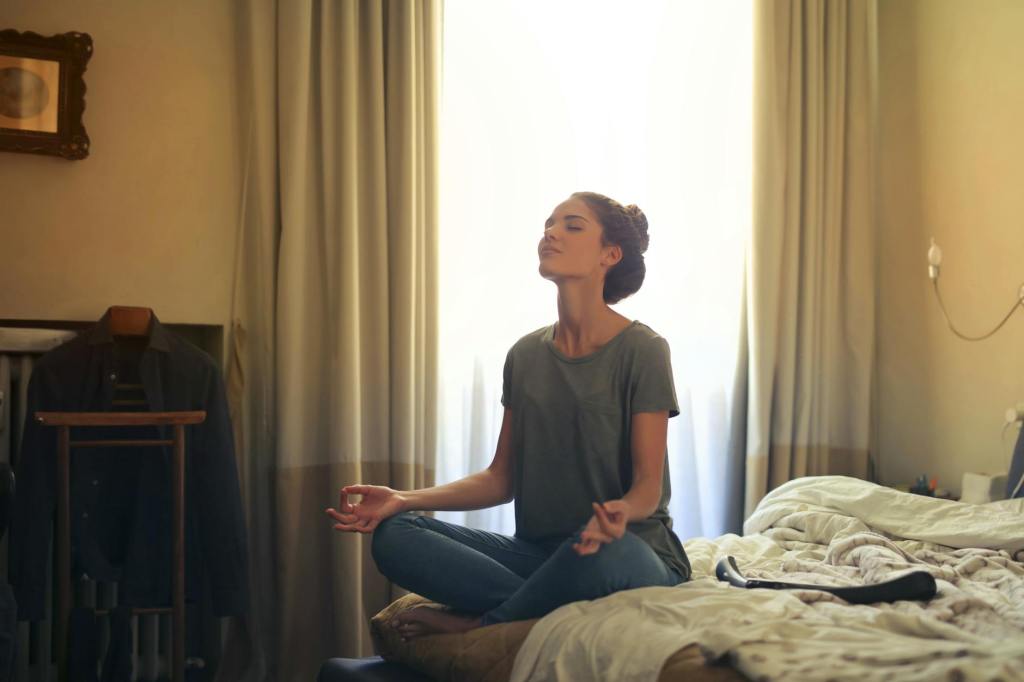
I’ve been meditating consistently for about three months now, and I need to tell you something: it still feels like trying to wrangle a caffeinated squirrel most days. Despite what the Instagram wellness gurus might say, my mind hasn’t transformed into some Zen Garden of perpetual calm. If anything, sitting still has made me aware of just how relentlessly busy my brain actually is.
But here’s what I’ve learned—and maybe this will resonate with you if you’re also someone whose thoughts ping around like pinballs—the point isn’t to silence the noise. It’s to change your relationship with it.
The Myth of the Quiet Mind
When I first started meditating, I had this image in my head of what it was supposed to look like. I’d sit cross-legged (probably in some beautifully lit room with plants), close my eyes, and immediately drop into this profound state of inner peace. My thoughts would gently float away like clouds, leaving behind pure, clear awareness.
What actually happened: I sat down, closed my eyes, and was immediately assaulted by a mental playlist that included my grocery list, a conversation I had three days ago that I was still analyzing, the weird noise my car was making, whether I’d remembered to pay my electric bill, and a random song lyric that had apparently been living rent-free in my subconscious.
The first few weeks, I kept thinking I was doing it wrong. Surely meditation meant having no thoughts, right? Wasn’t the goal to achieve some kind of mental blankness?
Turns out, no. I was wrong. And this misconception is probably why so many people give up on meditation before they even really begin.
What Nobody Tells You About Mindfulness
The word “mindfulness” has been so thoroughly co-opted by the wellness culture that it’s easy to forget what it actually means. It’s not about emptying your mind or achieving some state of perpetual bliss. It’s about paying attention—really paying attention—to what’s happening in this moment, without immediately trying to fix or change it.
This sounds simple until you try it. Because paying attention to the present moment means noticing all kinds of things you might prefer to ignore: the anxiety sitting in your chest, the way your mind automatically jumps to worst-case scenarios, the fact that you’ve been holding tension into your shoulders for God knows how long.
Mindfulness isn’t a escape from these experiences. It’s a way of being present with them without being hijacked by them.
The Practice of NOT Fixing

Here’s where meditation gets interesting, and also where it challenges everything our culture teaches us about productivity and self-improvement. Instead of trying to solve or optimize or perfect anything, you’re just…sitting there. Breathing. Noticing.
When a thought comes up—and they always do—you don’t push it away or judge yourself for having it. You acknowledge it (sometimes I literally think “thinking”) and return your attention to your breath. When another thought comes, you do the same thing. And again. And again.
It’s not about getting good at having no thoughts. It’s about getting good at noticing when you’ve been swept away by thoughts and gently returning to the present moment. The return is the practice, not the absence of wandering.
This has changed everything for me. I’ve spent most of my adult life trying to think my way out of problems, to analyze and strategize and optimize my way to better outcomes. Meditation asks you to do the exact opposite: to sit with what is, without immediately trying to change it.
The Truth About Emotions
One thing that surprised me the most about creating a meditation practice was how much emotion came up. Not during every session, but often enough that I realized I’d been unconsciously avoiding a lot of feelings by staying constantly busy.
When you sit still and get quiet, you create space for whatever you’ve been carrying to surface. Sometimes that’s sadness you didn’t know you were holding onto. Sometimes it’s anger you’ve been pushing down. Sometimes it’s just a vague sense of restlessness or dissatisfaction that you can’t quite name.
The temptation is to get up, to distract yourself, to do something other than feel whatever’s coming up. But meditation teaches you that you can feel difficult emotions without being destroyed by them. You can sit with discomfort without immediately needing to make it go away.
This doesn’t mean staying stuck in negative emotions. It means developing the skills to be present with your full range of human experience, rather than constantly running from parts that feel challenging.
The Myth of Spiritual Bypassing
Let me be clear when I say meditation is not a cure-all, and mindfulness is not a substitute for addressing real problems in your life. There’s a tendency in the wellness culture to use spiritual practices as a way to avoid dealing with practical realities—toxic relationships, financial stress, systemic inequities, mental health issues that might benefit from professional support.
Meditation can help you respond to these challenges with more clarity and less reactivity, but it’s not going to magically solve them. If you’re in therapy, keep going to therapy. If you need to have a difficult conversation with someone, you still need to have that conversation. If there are concrete changes you need to make in your life, sitting on a cushion won’t make them happen for you.
What meditation can do is help you show up to your life more fully, with greater awareness of your patterns and reactions, and with more intent in choosing your responses rather than being driven by automatic habits.
The Magic of Paying Attention

Three months in and my meditation practice still isn’t what I imagined it would be. My mind still churns with thoughts and worries and random observations. I still have sessions where I feel like I spent the entire time planning what to make for dinner.
But something has shifted. I’m more aware of my emotional patterns, more able to catch myself when I’m spiraling into anxiety or reactivity. I’ve developed what I can only describe as a different relationship with my own mental chatter—less identified with every thought that passes through, more able to observe the workings of my mind with curiosity rather than judgement.
And sometimes, there are moments of stillness. Not the absence of thought, but a sense of spaciousness around whatever’s arising. A feeling of being rounded in something greater than the constant commentary in my head.
These moments aren’t the goal, but they’re a reminder of what becomes possible when we stop running from ourselves and start paying attention to what’s actually here.
Start Where You Are
If you’re curious about meditation but intimidated by the idea of sitting still for long periods, start small. Five minutes. Three minutes, even. The length matters less than the consistency.
You don’t need special equipment or apps or courses (though guided meditations can be helpful when you’re starting out). You just need to sit somewhere comfortably, close your eyes or soften your gaze, and pay attention to your breathing.
When your mind wanders, notice that it wandered and return your attention to your breath. That’s it. That’s the practice.
Don’t expect instant results or dramatic transformations. Think of it more like going to the gym for your awareness. You’re building the muscle of attention, developing the capacity to be present with whatever arises without being overwhelmed by it.
The Point of It All
Mediation won’t make you a different person, but it might help you become more yourself—less reactive, more responsive, more able to show up to your life with clarity and compassion. It won’t eliminate stress or difficulty, but it can change how you relate to these parts of the human experience.
In a world that profits from our distraction and rewards our constant busyness, the simple act of sitting still and paying attention becomes a quiet form of rebellion. It’s a way of saying: this moment, this breath, this experience is worthy of my full attention.
And maybe, in learning to be present with ourselves, we become more capable of being present with each other, with the world, with the beauty and messiness and mystery of being alive right now.
That seems like reason enough to me. To sit still, even when our brains won’t shut up.







 Kat McAdaragh
Leave a comment